EPO vs. POS: Which "Middle Ground" Health Plan Is Right for You?
Said Nago
Published on

When you sit down to navigate the high-stakes environment of your company's annual health insurance open enrollment, you are likely confronted with a confusing "alphabet soup" of options. For decades, the choice was binary: you either chose the HMO (Health Maintenance Organization), which was affordable but highly restrictive, or you opted for the PPO (Preferred Provider Organization), which offered maximum flexibility at a premium price. However, in the 2026 healthcare market, the middle ground has become the new frontier. Insurance carriers, in an effort to manage rising costs while meeting consumer demand for choice, have aggressively expanded two hybrid models: the EPO (Exclusive Provider Organization) and the POS (Point of Service).
These "middle ground" plans are appearing more frequently in employer benefits packages and on the Affordable Care Act (ACA) Marketplace, yet they remain the most misunderstood options in the American insurance landscape. Search data reveals that thousands of consumers actively search for "EPO vs POS" every month, trying to decipher which option offers the best value for their specific medical needs. While both plan types sit in the sweet spot between the extreme cost-containment of an HMO and the expensive autonomy of a PPO, they achieve that balance through fundamentally different philosophies. One prioritizes network simplicity by stripping away out-of-network benefits, while the other prioritizes coordinated care by utilizing a primary care "gatekeeper."
Choosing the wrong middle-ground plan can lead to significant financial surprises, from un-reimbursable out-of-network bills to denied claims for failing to secure a referral. This exhaustive guide will go head-to-head with EPOs and POS plans. we will strip away the marketing jargon to explain exactly how they differ in terms of network access, emergency care, specialist referrals, and out-of-pocket liability. By the end of this article, you will have a clear, mathematical framework to decide which of these hybrids is the right financial shield for your family in 2026.
The EPO: The "PPO-Lite" (Autonomy Without the Safety Net)
An Exclusive Provider Organization (EPO) is rapidly becoming the most popular plan type for young professionals and healthy families. It mimics the user experience of a high-end PPO but at a price point that is often closer to an HMO. To understand an EPO, you should think of it as a PPO that has completely removed its out-of-network benefits.
1. The "No-Referral" Freedom
The single most compelling feature of an EPO is autonomy. Like a PPO, an EPO typically does not require you to select a Primary Care Physician (PCP). More importantly, you do not need a referral to see a specialist.
- The Practical Advantage: If you wake up with a suspicious mole and want to see a dermatologist, you simply log into your insurer's portal, find an in-network dermatologist, and book the appointment. You do not need to pay for a "consultation" visit with a general doctor just to get a permission slip.
- The Time Savings: For busy individuals, the ability to bypass the "gatekeeper" saves weeks of administrative lag time. This direct-access model is a major factor in the high consumer satisfaction scores for EPO plans.
2. The Absolute Network Boundary
The "Exclusive" in EPO is literal and unforgiving. This plan covers only healthcare providers within its specific network.
- The Trade-off: Unless it is a true, life-threatening emergency (which we will discuss in the context of the No Surprises Act), an EPO will pay zero percent of the cost for care received outside of its network. There is no "out-of-network deductible." There is no "coinsurance."
- The Financial Risk: If you unknowingly see an out-of-network provider—perhaps an anesthesiologist at an in-network hospital—you could be left with 100% of the bill. In an EPO, the burden of verifying network status for every single provider is entirely on you.
3. Network Size and Depth
Because EPOs do not have to pay for out-of-network claims, insurers can afford to build larger, more robust in-network directories than they do for HMOs. In many major metropolitan areas, the EPO network is nearly identical to the carrier's PPO network. However, if you live in a rural area or frequently travel out of state, the "exclusive" nature of the network becomes a significant liability.
The POS: The "HMO-Plus" (Managed Care with a Safety Valve)
A Point of Service (POS) plan approaches the middle ground from the opposite direction. It is fundamentally an HMO structure that allows you to break the rules—provided you are willing to pay a heavy financial penalty. It is designed for those who want the lower cost of a managed-care plan but want the peace of mind of having a "safety valve" for out-of-network emergencies.
1. The Mandatory Gatekeeper (PCP)
Unlike an EPO, a POS plan is built on the philosophy of coordinated care. You must choose a Primary Care Physician who acts as the "Point of Service" for all your medical needs.
- The Referral Hurdle: If you need to see a specialist, you must first visit your PCP. They must determine that the specialized care is medically necessary and issue a formal referral. If you see an in-network specialist without this referral, the insurance company will likely treat the visit as "out-of-network" and charge you the higher rate, or they may deny the claim entirely.
- Coordination of Care: Proponents of POS plans argue that having one doctor manage your entire medical file leads to better health outcomes and prevents duplicate testing—a major theme in the AI-driven preventive care models we see emerging in 2026.
2. The Out-of-Network Option
This is the "Plus" that differentiates a POS from a standard HMO. If you want to see a specialist who is not in your network—perhaps a world-renowned expert for a specific condition—a POS plan allows you to do so.
- The Cost Penalty: To use this "out-of-network" door, you will pay significantly more. You will typically face a separate, high out-of-network deductible (e.g., $10,000) and a high coinsurance rate (e.g., you pay 50% of the bill).
- The Paperwork Burden: When you go out of network in a POS, the provider is not required to file the claim for you. You will likely have to pay the doctor their full "sticker price" upfront, obtain a "Superbill," and then fight for reimbursement from your insurer later—a process fraught with potential medical billing errors.
The Financial Showdown: Which Plan is Actually Cheaper?
To determine the true cost of these plans, you must move beyond the monthly premium and look at the "Total Cost of Ownership." In our HMO vs PPO financial showdown, we established that high premiums can sometimes be a bargain if you have high medical needs. The same applies here.
Premium Costs: In 2026, EPO premiums are generally lower than POS premiums. This is because EPOs eliminate the expensive administrative burden of processing out-of-network claims. Insurers can more accurately predict their costs in an EPO, and they pass those savings to you.
Out-of-Pocket Costs:
- The EPO Edge: For routine care, the EPO is almost always cheaper. You don't have to pay for a PCP visit just to get a referral, and the in-network copays are usually flat and predictable.
- The POS Edge: The POS is only "cheaper" in a worst-case scenario where you must go out of network. In an EPO, that bill is 100% yours. In a POS, it is 50% yours. It is essentially an insurance policy against the limitation of the network itself.
Deep Dive: Navigating Emergencies and the "No Surprises Act"
One area where EPOs and POS plans are legally identical is Emergency Services. This is a critical point of clarity for 2026. Under the federal No Surprises Act, if you have a medical emergency, you can go to the nearest emergency room, regardless of its network status.
- In-Network Processing: Your insurance company (whether it is an EPO, POS, HMO, or PPO) is legally required to process that emergency claim as if it were in-network. They cannot charge you a higher out-of-network deductible or coinsurance for emergency care.
- Balance Billing Protections: The out-of-network hospital and doctors are also prohibited from "balance billing" you for the difference between their charges and what your insurance paid.
- The Post-Stabilization Trap: This is where you must be careful. Once the ER doctors have "stabilized" you, the protections of the No Surprises Act may end. If you are admitted to an out-of-network hospital for three days of recovery, your EPO will likely stop paying. A POS plan would continue to pay, but at its higher out-of-network rate.
Which Plan Matches Your Life? Scenario Analysis
To make the right choice, you must perform a realistic audit of your healthcare habits. Let's look at three common profiles for 2026.
Profile A: The "Digital Nomad" or Frequent Traveler
- The Habits: You work remotely and spend several months a year in different states. Or, your job requires constant domestic travel.
- The Best Fit: POS.
- Why: An EPO network is usually geographically anchored. If you are in a different state and have a non-emergency issue (like an ear infection or a minor injury), an EPO leaves you with no coverage. A POS plan allows you to find a local doctor and get at least some reimbursement, protecting your Health Savings Account (HSA) from being drained by routine out-of-state visits.
Profile B: The Urban Solo Professional
- The Habits: You are healthy, live in a major city like New York or Chicago, and value your time above all else. You want to manage your health via an app and see specialists on your own terms.
- The Best Fit: EPO.
- Why: Major cities have massive EPO networks that include almost every doctor you would ever need. The "No-Referral" model fits your lifestyle perfectly. You save money on premiums and skip the "gatekeeper" visits you don't actually need.
Profile C: The Chronic Condition Manager
- The Habits: You or a family member has a complex chronic condition (like autoimmune disease or cancer). You have a trusted team of specialists you’ve seen for years.
- The Best Fit: POS (or a full PPO).
- Why: For you, the risk of a specialist dropping out of a network is a major life disruption. A POS plan provides the "safety valve" you need. If your oncologist leaves the network, you can continue seeing them under the out-of-network benefit without starting over with a new doctor. The higher premium is a small price to pay for continuity of care.
The Role of AI in Choosing Your "Middle Ground"
As we move into the second half of 2026, the process of choosing between an EPO and a POS is being simplified by AI. Many large employers now provide "Benefit Optimizers"—AI tools that ingest your last three years of claims data and simulate your out-of-pocket costs for every plan offered.
If your employer offers such a tool, use it. The AI can identify patterns you might miss. For example, it might notice that you frequently see a chiropractor who is out-of-network for the EPO but in-network for the POS, making the "more expensive" POS plan the cheaper option for you. This is the positive side of the AI revolution in health insurance.
The 4-Step Checklist for Your Decision
Before you click "submit" on your benefits portal, perform this final audit:
- Search the Provider Directory: Don't just check your PCP. Check every specialist you've seen in the last two years. If they are all in-network, the EPO is likely your winner.
- Verify the Referral Rules: Some modern POS plans have "open access" within certain groups. Ask HR: "Do I always need a referral for every in-network specialist?"
- Check the "Allowed Amount": If you are considering a POS for its out-of-network benefits, call the insurer. Ask: "What is the allowed amount for a standard 45-minute therapy session (CPT 90834) in my zip code?" If the allowed amount is low, the out-of-network "benefit" is an illusion.
- Audit Your HSA/FSA Strategy: If you choose the EPO and save $200 a month in premiums, are you prepared to put that $2,400 a year into an HSA? This creates your own "self-insured" out-of-network fund, which is often smarter than paying for a POS safety valve you may never use.
Conclusion: Cost, Choice, and Coordinated Care
The rise of the EPO and the POS plan represents a maturation of the American health insurance market. We have moved beyond the "one-size-fits-all" models of the past into a more nuanced landscape where consumers can choose the level of management they are comfortable with.
The EPO is the plan for the modern, efficient consumer who lives in a robust network area and wants to manage their own care without bureaucratic interference. It rewards those who are diligent about staying "in-network."
The POS plan is the choice for the cautious planner, the traveler, and the patient with complex needs. It offers a structured, coordinated care model with a Primary Care Physician at the center, while providing a critical financial escape hatch for those rare times when the network isn't enough.
There is no "best" plan, only the plan that best fits your medical reality and your financial tolerance. By understanding the mechanics of gatekeepers, the absolute boundaries of exclusive networks, and the legal protections of the No Surprises Act, you can navigate the 2026 open enrollment period with the confidence of an expert. Your health is your most valuable asset—make sure you've built the right shield to protect it.
Share this article
About the Author
Said Nago
Health & Life Insurance Expert
With a background in financial planning, Said brings a holistic approach to insurance. He focuses on life and health coverage, ensuring families have the protection they need for a secure future.
Related Articles
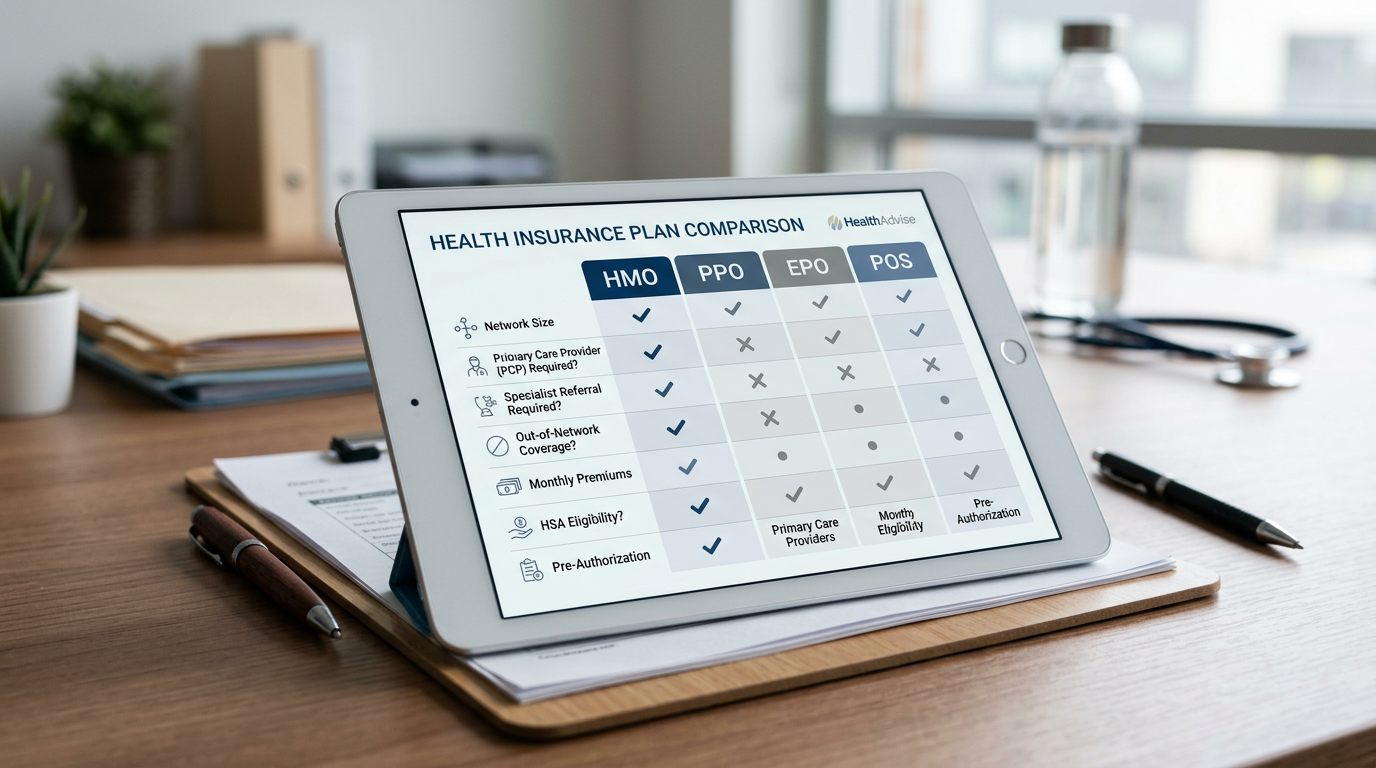
The Ultimate Health Insurance Cheat Sheet: HMO, PPO, EPO & POS Explained
Drowning in alphabet soup during open enrollment? We break down the exact differences between HMO, PPO, EPO, and POS plans with a clear comparison table to help you choose the right network.
Said Nago

Copay Accumulators: Why Your Rx Coupon Isn't Helping Your Deductible
Using a manufacturer coupon to pay for expensive medications? Your insurance company might be pocketing the savings while leaving your deductible untouched. We expose the Copay Accumulator trap.
Said Nago