EOB vs. The Bill: How to Spot Costly Medical Billing Errors
Said Nago
Published on

The American healthcare system is notorious for its administrative complexity, and nowhere is this more painfully evident than in the fragmented, often opaque world of medical billing. For the average patient, the weeks following a medical procedure or a hospital stay are often defined by a dizzying influx of paperwork. You receive a summary of charges from the hospital, an invoice from a physician’s group you’ve never heard of, a statement from a laboratory, and—most importantly—a document from your insurance company called an Explanation of Benefits (EOB).
To the untrained eye, these documents appear to be a chaotic jumble of five-digit codes, inflated "sticker price" charges, and alarming bold-faced numbers labeled "Amount Due." The stress of illness is compounded by the stress of potential financial ruin. According to a landmark study by the Kaiser Family Foundation, nearly one in five insured Americans received a medical bill they believed was an error in the last year. Even more staggering are the estimates from consumer advocacy groups like Medical Billing Advocates of America, which suggest that up to 80% of all medical bills contain some form of error, ranging from simple clerical typos to systematic "upcoding" and illegal balance billing.
In the high-stakes financial landscape of 2026, learning to audit your own medical bills is no longer a niche skill; it is a fundamental requirement for personal financial health. You must move from being a passive recipient of confusing bills to an empowered, vigilant healthcare consumer. This exhaustive guide will provide you with the technical expertise and the procedural roadmap to perform a "forensic audit" of your medical charges. we will explain the critical difference between the EOB and the provider's bill, decode the universal language of medical coding, expose the most common "invisible" billing errors, and provide a battle-tested protocol for disputing overcharges and keeping your money in your pocket.
The Foundation of Defense: The EOB is the Absolute Authority
Before you write a single check to a doctor or hospital, you must understand the hierarchy of documentation. The most important rule of medical financial management is this: The provider's bill is a request, but the EOB is the receipt of the contract.
When you choose a plan during open enrollment, you are entering into a three-way legal agreement between yourself, your healthcare provider, and your insurance carrier. The EOB is the official statement of how that agreement was applied to a specific medical encounter.
Why the EOB and the Bill Never Match Initially
When a hospital sends you an initial "statement of charges," they are usually showing you their chargemaster rates. These are the highly inflated, non-negotiated prices that no one—not the government and certainly not the insurance companies—actually pays. The EOB, however, reflects the Negotiated Rate (or Allowed Amount). This is the much lower price your insurer has contractually agreed to pay the provider for that specific service.
The Golden Rule: You should NEVER pay a medical bill until you have the corresponding EOB in your hand and have verified that the "Patient Responsibility" on the EOB matches the "Amount Due" on the provider's bill to the penny. If the provider's bill is higher, they may be attempting "balance billing," which, as we discuss in our guide to the No Surprises Act, is now illegal in many common scenarios.
Decoding the Universal Language: CPT and ICD-10 Codes
To spot errors, you must be able to read the language that doctors and insurers use to communicate. Every medical bill and EOB is built on two primary coding systems.
- CPT Codes (Current Procedural Terminology): These five-digit numeric codes describe exactly what the doctor did to you. For example, 99213 is a standard, 15-minute office visit, while 45378 is a diagnostic colonoscopy.
- ICD-10 Codes (International Classification of Diseases): These alphanumeric codes (e.g., J01.0 for acute sinusitis) describe why the doctor performed the procedure.
The Error Trigger: If the CPT code doesn't logically align with the ICD-10 code (a mismatch between the "what" and the "why"), the insurance company’s AI will likely deny the claim, as we explore in the AI revolution in health insurance. However, sometimes the claim is paid, but at a much higher "upcoded" level than what actually occurred.
The "Big Four" Medical Billing Errors: How to Spot the Stealth Inflation
Billing departments are often run by "Revenue Cycle Management" companies whose sole incentive is to maximize the hospital's collections. This has led to the proliferation of several systematic "stealth" errors.
1. Upcoding: The Service Inflation Tactic
Upcoding is the practice of billing for a more complex and expensive version of a service than what was actually provided.
- The Office Visit Example: There are five levels of "Evaluation and Management" (E/M) for office visits. A Level 3 visit (99213) is a standard check-up. A Level 4 or 5 visit (99214/99215) is for highly complex, life-threatening, or time-intensive management.
- The Error: Many offices now "auto-code" every visit as a Level 4 to increase revenue. If you spent 10 minutes with the doctor discussing a simple prescription refill, but you see CPT 99214 on your bill, you have been upcoded. This can cost you an extra $50 to $100 in copays or deductible exposure.
2. Unbundling: The "Salami Slicing" of Charges
Certain medical procedures are meant to be billed as a "global fee"—a single package that includes all the standard components of that procedure. Unbundling occurs when the provider breaks that package apart and bills for each component separately.
- The Surgical Example: A major surgery code should include the incision, the closure, and standard post-operative care. If you see separate charges for "closing the wound" or "local anesthesia" alongside the primary surgery code, the provider is "double-dipping" on the charges.
3. Duplicate Billing: The Ghost Charges
In the chaos of a hospital stay, duplicate billing is rampant. You might be charged for two sets of X-rays when only one was taken, or charged for the same medication by both the nursing staff and the pharmacy department.
- The Room Fee Trap: In most hospitals, the daily "room and board" fee is supposed to include basic nursing care, bed linens, and routine supplies. Many hospitals will mistakenly (or intentionally) bill for "nursing services" as a separate line item.
4. The "Wrong Patient" and Cancelled Procedure Errors
This sounds absurd, but in high-volume facilities, it is a common clerical error. If a doctor schedules a test for you but then cancels it after reviewing your chart, the administrative staff may forget to "void" the charge. You end up paying for a test you never had.
The Forensic Audit: A Step-by-Step Protocol for Patients
If you receive a bill that feels high, or if it doesn't match your EOB, do not panic. Follow this 5-step audit protocol to identify and eliminate errors.
Step 1: Demand the "Itemized Bill" The standard summary bill you receive in the mail is useless for an audit. It will simply list broad categories like "Pharmacy" or "Radiology." You must call the provider’s billing office and say: "I am requesting a full, itemized bill for this date of service, including all five-digit CPT codes and HCPCS codes." By law, they must provide this.
Step 2: Cross-Reference with Your EOB Lay your itemized bill next to your EOB from the insurance company.
- Does every date of service match?
- Does every CPT code on the bill appear on the EOB?
- Is the "Patient Responsibility" on the EOB identical to the "Negotiated Rate" minus the insurance payment?
Step 3: Google the CPT Codes Use a resource like the AMA's CPT search tool or a simple Google search (e.g., "CPT 90837 meaning") to see what you are actually being charged for. If you see a code for a "Complex Consultation" but your doctor only spent five minutes with you, mark it for dispute.
Step 4: Audit the Medications and Supplies Hospital bills are notorious for "nickel-and-diming" on supplies. If you are charged $30 for a "mucus recovery system" (which is just a box of tissues), or $50 for a "thermal therapy kit" (an ice pack), you have the right to question the "medical necessity" and the price of these items.
Step 5: Verify the "No Surprises Act" Compliance If your care involved an emergency or a surgery at an in-network facility, check the specialists. If you see a bill from an out-of-network anesthesiologist, radiologist, or pathologist, they are likely in violation of the federal No Surprises Act. They are prohibited from billing you more than your in-network rate. For more on this, see our guide to surprise billing.
The Dispute Process: How to Fight and Win
Once you have identified an error, the real work begins. You must be persistent, polite, and meticulous.
The "First Call" Strategy
Call the provider's billing department first. Most errors are clerical and can be fixed with a simple conversation.
- The Script: "I've reviewed my itemized bill and my EOB. It appears I was billed for CPT 99214 (Level 4 visit), but my records show this was a routine 10-minute follow-up. I'm requesting that this be re-coded to a Level 3 visit and that you re-submit the claim to my insurance."
- Get a Reference Number: Always ask for the name of the representative and a "call tracking number."
Engaging Your Insurance Advocate
If the provider refuses to budge, your insurance company is your best ally. Remember, if the provider is overcharging you, they are also overcharging the insurance company.
- Call your insurer: Ask for a "claims specialist" or a "member advocate."
- The Argument: "I believe my provider is violating their in-network contract by unbundling these charges (or upcoding this visit). I have my itemized bill ready to review with you." This often triggers an internal investigation by the insurer’s "Fraud, Waste, and Abuse" department.
The Written Appeal
If phone calls fail, you must move to a formal written appeal.
- For Insurance Denials: If the insurer denied a claim because of a billing error, follow the steps in our mental health benefits guide for filing a formal appeal.
- For Provider Disputes: Send a certified letter to the hospital's billing manager. State clearly that you are disputing the bill, include copies of your evidence (itemized bill, EOB, and your own notes), and state that you expect a response within 30 days.
Financial Self-Defense: Protecting Your Credit
While a bill is in dispute, your credit score is at risk. In 2026, medical debt is still a primary cause of credit score drops, which can lead to higher car insurance premiums.
- The 365-Day Rule: Federal credit reporting rules generally prevent medical debt from appearing on your credit report until it is at least one year past due. This gives you a 12-month "safe zone" to fight the bill.
- Notify the Bureaus: If a disputed bill is sent to collections, immediately file a dispute with Equifax, Experian, and TransUnion. State that the debt is "inaccurate and under insurance dispute."
Leveraging Tax-Advantaged Accounts (HSA/FSA)
When you finally settle on the correct amount you owe, ensure you pay it using the most efficient dollars possible. As we discussed in our guide on HSAs vs FSAs, these accounts allow you to pay for medical services with pre-tax money.
Pro Tip: If you discover a billing error and get a refund after you've already paid with your HSA/FSA card, you must contact your plan administrator to "re-pay" that money back into the account to avoid an IRS penalty.
Conclusion: The Empowered Patient
The complexity of medical billing is a feature of the system, not a bug. It is designed to be difficult to navigate so that providers can maximize revenue and insurers can minimize payouts. But by understanding the "alphabet soup" of CPT codes, demanding your itemized bill, and treating your EOB as your ultimate shield, you can reclaim control over your financial health.
In 2026, healthcare is not just a clinical experience; it is a financial transaction. Like any other major transaction—whether you are insuring your home or protecting your teen driver—it requires due diligence. Don't let a billing error drain your HSA or ruin your credit. Audit every charge, question every code, and never pay a penny more than what your contractually negotiated Explanation of Benefits says you owe. Your wallet, and your peace of mind, will thank you.
Share this article
About the Author
Said Nago
Health & Life Insurance Expert
With a background in financial planning, Said brings a holistic approach to insurance. He focuses on life and health coverage, ensuring families have the protection they need for a secure future.
Related Articles
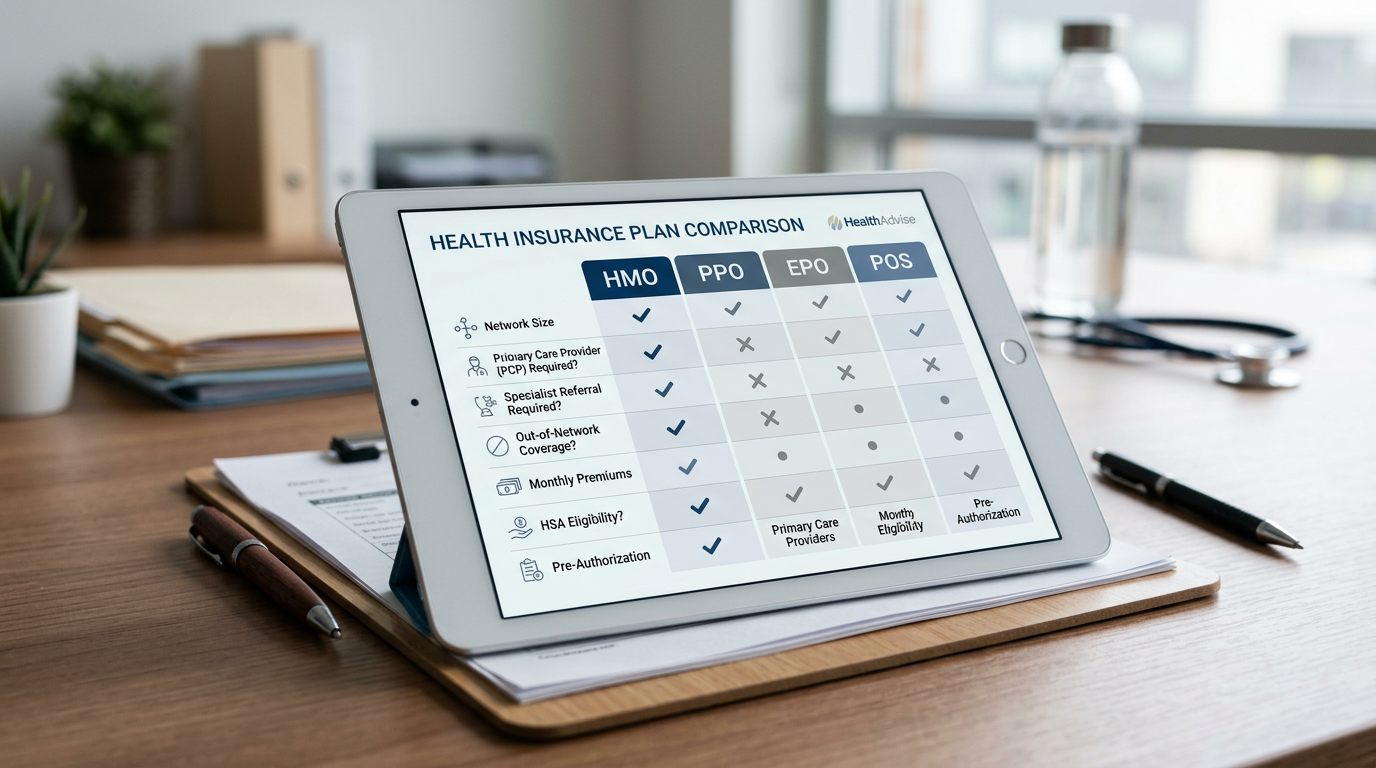
The Ultimate Health Insurance Cheat Sheet: HMO, PPO, EPO & POS Explained
Drowning in alphabet soup during open enrollment? We break down the exact differences between HMO, PPO, EPO, and POS plans with a clear comparison table to help you choose the right network.
Said Nago

Copay Accumulators: Why Your Rx Coupon Isn't Helping Your Deductible
Using a manufacturer coupon to pay for expensive medications? Your insurance company might be pocketing the savings while leaving your deductible untouched. We expose the Copay Accumulator trap.
Said Nago