Hidden Health Insurance Fees: Why a Cheap HMO May Cost More Than a PPO
Said Nago
Published on

When most Americans shop for health insurance, they focus on two numbers: the monthly premium and the deductible. It is a logical starting point. "If I pay $300 a month and have a $1,000 deductible, I know my costs," they think. Unfortunately, in the opaque and often predatory world of US healthcare billing, this logic is a trap. The premium is merely the cover charge to get into the club; the real costs are hidden in the fine print of the "Explanation of Benefits" (EOB) documents that arrive weeks after your doctor's visit.
In 2026, the gap between "what you think you owe" and "what you actually owe" is widening. Insurance carriers are increasingly shifting costs to patients through complex mechanisms like "narrow networks," "tiered formularies," and the aggressive use of "Reference Based Pricing." A plan that looks cheap on paper—like a budget HMO—can easily become a financial catastrophe if you unknowingly step on a "billing landmine" like an out-of-network anesthesiologist or a miscoded preventive screening.
This exhaustive guide is not about choosing a plan; it is about auditing the plan you have. We will move beyond the basics to perform a forensic analysis of medical billing. We will decode the cryptic language of the EOB, explain the mathematical difference between "Billed Charges" and "Allowed Amounts," and provide a step-by-step protocol for spotting and fighting the three most common billing errors that cost patients billions every year. If you have ever opened a medical bill and felt your heart rate spike, this guide is your manual for financial self-defense.
Part 1: The "Allowed Amount" Trap—The Most Dangerous Number in Healthcare
To understand why you owe money, you must understand the "Secret Contract." When a doctor joins an insurance network (HMO, PPO, or EPO), they sign a contract agreeing to accept a specific rate for every service. This is the Allowed Amount (or Negotiated Rate).
- The Scenario: You hurt your back and see a chiropractor. The chiropractor’s "Standard Rate" (what they bill) is $200.
- The Contract: Your insurance company has a contract that says a spinal adjustment (CPT Code 98940) is worth exactly $60 in your zip code.
- The Result:
- If In-Network: The doctor must write off the $140 difference. You owe only the copay or the $60 (if you haven't met your deductible).
- If Out-of-Network: The doctor has no contract. They bill $200. The insurance pays based on the $60 allowed amount (e.g., 50% = $30). You owe the remaining $30 PLUS the $140 "Balance Bill." Total Cost: $170.
The Hidden Fee: Many "Cheap" PPO plans have painfully low Allowed Amounts for out-of-network care. They might pay "70% of UCR" (Usual, Customary, and Reasonable), but their definition of UCR is in the bottom 10th percentile. You think you have coverage, but the math leaves you holding the bag.
Part 2: EOB Decoding Cost—Reading the Hieroglyphics
The Explanation of Benefits (EOB) is not a bill. It is a "receipt of processing." However, it is the only document that tells you the truth about your liability. If you throw it away, you are flying blind.
Here is how to decode an EOB line-by-line to find hidden costs:
Column A: "Service Code" (The DNA of the Bill)
Every medical action has a 5-digit CPT Code (Current Procedural Terminology).
- The Trap: Upcoding. A standard 15-minute office visit is CPT 99213. If your doctor spent 10 minutes with you but billed CPT 99214 (a complex 25-minute visit), they have "upcoded" you. This increases the cost by roughly $40-$60.
- The Action: Always Google the code on your EOB. If the description ("High Severity Complexity") doesn't match your reality ("I had a sore throat"), you have grounds for an appeal.
Column B: "Billed Charges" vs. "Allowed Amount"
- The Trap: Phantom Savings. The EOB will proudly show: "You saved $500!" This is marketing fluff. It just means the doctor billed a fantasy number ($800) and the insurance approved the real number ($300). Ignore the "Savings" column; it is irrelevant to your wallet. Focus only on the "Patient Responsibility."
Column C: "Remark Codes" (The Denial Engine)
At the bottom of the EOB, you will see tiny codes like "PR-1" or "CO-45."
- CO (Contractual Obligation): The doctor must write this off. If they bill you for this amount, it is illegal.
- PR (Patient Responsibility): This is your deductible, copay, or coinsurance. You must pay this.
- The Trap: If you see a code that says "Denied - Not Medically Necessary," the insurance pays $0 and you owe 100%. This often happens with "bundled" tests in an HMO.
Part 3: The "Facility Fee" Surprise
One of the fastest-growing hidden costs in 2026 is the Facility Fee.
- The Trend: Hospitals are buying up local physician practices. Your dermatologist, who used to be independent, is now "owned" by the massive Hospital System down the street.
- The Cost: Because the office is now considered a "Hospital Outpatient Department" (HOPD), they can charge a separate "Facility Fee" just for you walking in the door.
- The Bill: You receive two bills. One for the doctor's time ($150) and one for the "Room Use" ($300).
- The Prevention: Before booking an appointment, ask specifically: "Is this location billed as a hospital-based clinic or a private office?" If it's hospital-based, your "cheap" office visit copay might not apply; instead, you'll be hit with a deductible charge.
Part 4: The Laboratory Loophole
HMOs and EPOs are strict about labs.
- The Scenario: You go to your in-network doctor for a physical. The doctor draws your blood. So far, so good.
- The Error: The doctor sends the blood to "LabCorp," but your specific HMO contract requires "Quest Diagnostics."
- The Result: Two weeks later, you get a bill for $400 from LabCorp. The insurance denied it as "Out of Network."
- The Defense: This is technically a violation of the "No Surprises Act" if the lab was done without your consent at an in-network facility, but fighting it is a nightmare. Always ask: "Which lab are you sending this to, and is it in-network for [Plan Name]?"
Part 5: EOB Estimate Explanation—Preventative vs. Diagnostic
The Affordable Care Act (ACA) mandates that "Preventative Care" (annual physicals, mammograms, colonoscopies) be free ($0 copay/deductible). However, a simple conversation can change the billing code and cost you hundreds.
- The "Doorknob" Moment: You are at your free annual physical. As the doctor is leaving, you say, "Oh, by the way, my knee has been hurting."
- The Code Switch: The doctor looks at your knee. The visit instantly changes from a "Preventive" code (Z00.00) to a "Diagnostic" code (99213).
- The Bill: You are now charged for an office visit. Your "free" physical just cost you $150.
- The Lesson: Keep your annual physical strictly about prevention. If you have a specific ailment, schedule a separate appointment or be prepared to pay the deductible.
Part 6: How to Audit a Medical Bill in 15 Minutes
Never pay a medical bill immediately. Put it in a folder and wait. Follow this protocol:
- Wait for the EOB: Do not pay the bill from the doctor until the EOB from the insurance company arrives. They must match. If the doctor asks for $200 but the EOB says "Patient Responsibility: $100," you only pay $100.
- Request an Itemized Bill: If the bill is large (hospital stay), call the billing department and demand an "Itemized Statement with CPT Codes." (See our HMO vs PPO guide for more on network structures).
- Check for Duplicates: Look for double charges. Did they charge for a "Tylenol" at 10:00 AM and again at 10:05 AM?
- Verify the Network Discount: Ensure the "Adjustment" column on the bill matches the "Network Discount" on the EOB. If it's missing, they are balance billing you.
Part 7: The "No Surprises Act" 2026 Update
We touched on this in our Mental Health Guide, but it applies everywhere. The No Surprises Act protects you from out-of-network bills for:
- Emergency Services: Even if the hospital is out-of-network.
- Air Ambulances.
- Out-of-Network Providers at In-Network Facilities: If you have surgery at an in-network hospital, the anesthesiologist cannot bill you out-of-network rates.
How to Use It: If you receive a bill that violates this, do not pay it. Call the provider and say: "This bill appears to violate the No Surprises Act. Please review it or I will file a complaint with CMS." This script alone resolves 90% of erroneous balance bills.
Part 8: The Role of HSAs in Mitigating Hidden Costs
If you are stuck with a high-deductible plan where these costs hit hardest, the Health Savings Account (HSA) is your only tax shield.
- The Strategy: Use HSA funds to pay these "hidden" costs. Since the money is pre-tax, you are effectively getting a 30% discount on that surprise facility fee.
- The Audit: Keep your EOBs as receipts for your HSA withdrawals. The IRS requires proof that the expense was medically verified.
Conclusion: Trust No Bill
In the 2026 healthcare market, billing errors are a feature, not a bug. The complexity of the system allows providers and insurers to offload costs onto the least informed party: you.
By learning to decode your EOB, identifying the "Allowed Amount" gap, and spotting "upcoding" on your itemized bills, you transform from a passive payer into an active auditor. You can save thousands of dollars a year simply by verifying that the math is correct.
At Surety Insights, we believe Clarity is Coverage. Your health insurance premium is expensive enough; don't let clerical errors and hidden fees tax you twice. Audit every line, question every code, and keep your hard-earned money where it belongs.
Share this article
About the Author
Said Nago
Health & Life Insurance Expert
With a background in financial planning, Said brings a holistic approach to insurance. He focuses on life and health coverage, ensuring families have the protection they need for a secure future.
Related Articles
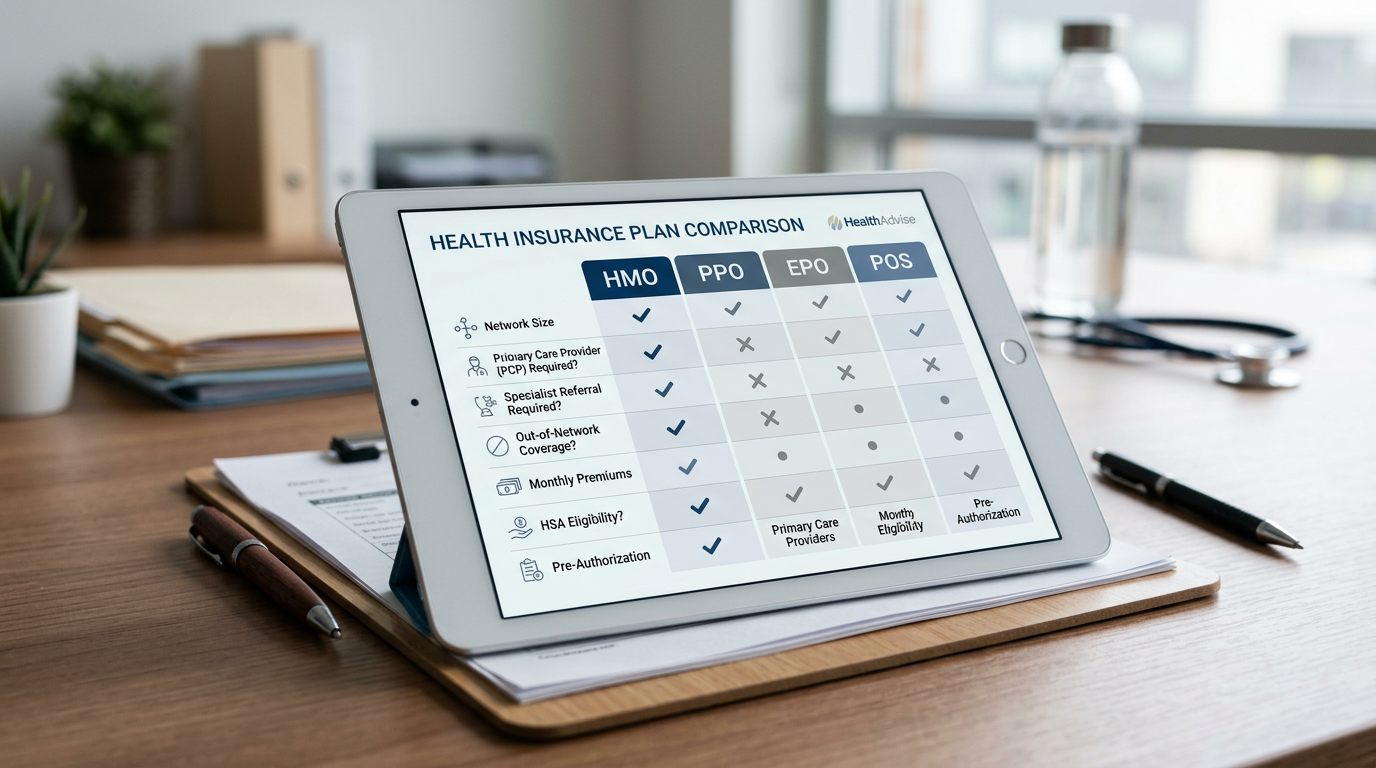
The Ultimate Health Insurance Cheat Sheet: HMO, PPO, EPO & POS Explained
Drowning in alphabet soup during open enrollment? We break down the exact differences between HMO, PPO, EPO, and POS plans with a clear comparison table to help you choose the right network.
Said Nago

Copay Accumulators: Why Your Rx Coupon Isn't Helping Your Deductible
Using a manufacturer coupon to pay for expensive medications? Your insurance company might be pocketing the savings while leaving your deductible untouched. We expose the Copay Accumulator trap.
Said Nago