Pet Damage vs. Pet Liability: What Your Home Insurance Actually Covers
Josef Bako
Published on
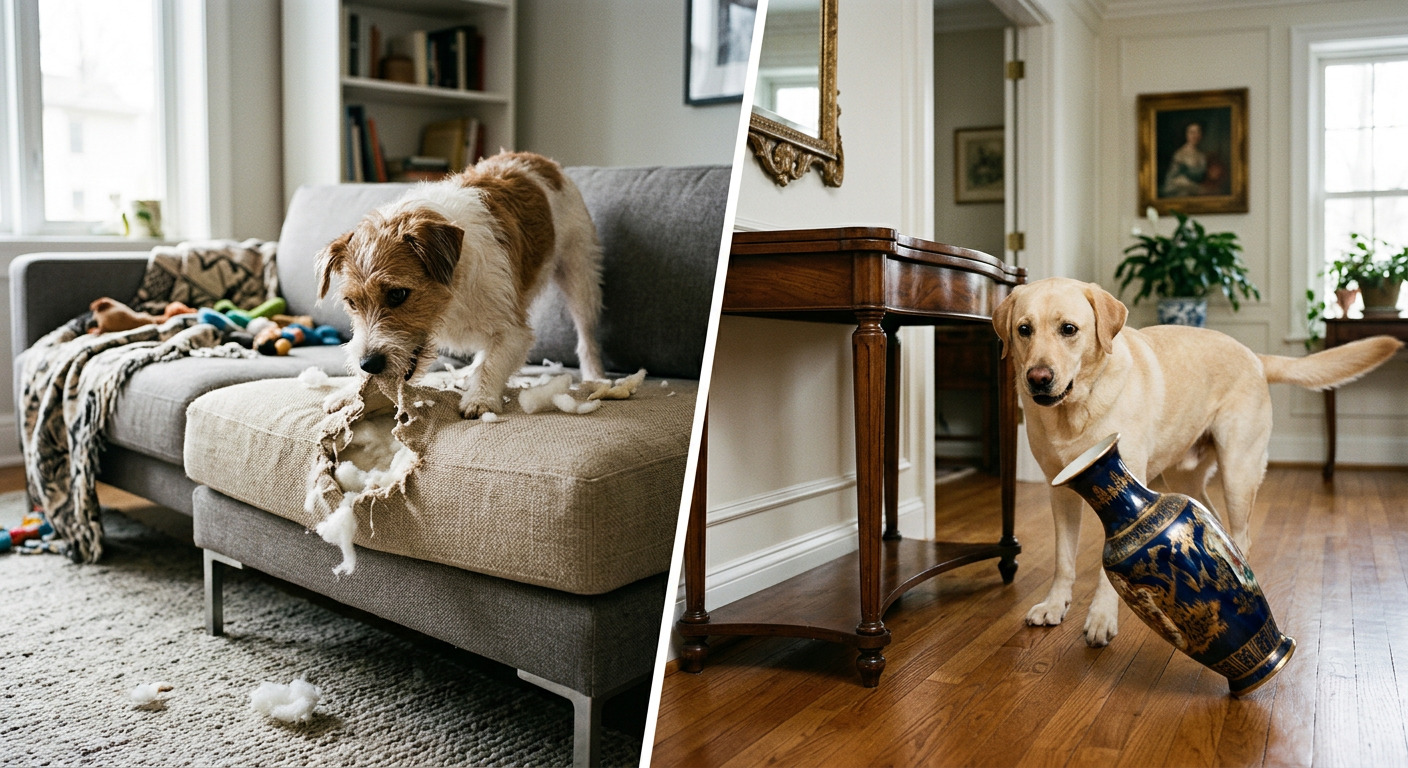
For the vast majority of American homeowners in 2026, a pet is not viewed as property; they are an integral, beloved member of the family. However, the introduction of a dog, cat, or exotic animal into a household fundamentally alters the risk profile of that property. Pets are unpredictable, energetic, and completely ignorant of the financial value of the things they interact with. They dig, they chew, they scratch, and they occasionally escape. When this natural animal behavior results in the destruction of expensive property, the financial consequences can be severe.
In the immediate aftermath of discovering that a new puppy has shredded a custom Persian rug, or that a cat has ruined a thousand dollars worth of hardwood flooring, the homeowner’s first instinct is to turn to their financial safety net. Search data reveals a massive volume of queries asking exactly this: "does home owner insurance provide liability for pet damage?" or "can I claim my dog ruined my floor on home insurance?"
The answers to these questions are found in the rigid, uncompromising legal language of the standard homeowners insurance contract. The insurance industry draws an absolute, unyielding boundary between First-Party Property Damage (damage to your stuff) and Third-Party Liability (damage to someone else's stuff).
This exhaustive, 2,200-word masterclass will dissect the intersection of animal behavior and property insurance. Building on our foundational guide to Pet Liability and Dangerous Breeds (which focuses on bodily injury), this article will focus strictly on the mechanics of property damage. We will explain the "Domestic Animal Exclusion," clarify how Personal Liability (Coverage E) protects you from your neighbors, and provide a strategic roadmap for managing the financial risks of pet ownership.
Part 1: First-Party Property Damage (Your Pet, Your House)
Let us address the most painful reality first. If you own a pet, and your pet damages your own home or your own belongings, your homeowners insurance will almost never cover the loss.
This scenario falls under Coverage A (Dwelling) and Coverage C (Personal Property). To understand the denial, you must understand how insurers view preventative maintenance versus sudden disaster.
The "Domestic Animal" Exclusion
If you pull out your HO-3 policy and read the exclusions under "Perils Insured Against," you will find a specific clause that excludes loss caused by: "birds, vermin, rodents, or insects; or animals owned or kept by an 'insured'."
The logic behind this exclusion is ironclad:
- Predictability: The insurance company views pet damage as a foreseeable and preventable risk. Dogs chew; cats scratch. Insurers classify this as "wear and tear" or a "maintenance" issue, which, as we discussed in our guide to long-term roof leaks, is never covered.
- Moral Hazard: If insurance paid for new carpets every time a puppy had an accident, the frequency of claims would bankrupt the industry. It would remove the financial incentive for owners to properly train and supervise their animals.
Common Denial Scenarios:
- The Chewed Sofa: Your dog destroys a $3,000 leather couch while you are at work. (Denied).
- The Cat Urine Floor: Your cat consistently misses the litter box, and the urine seeps into the subfloor, requiring $5,000 in hardwood replacement. (Denied—often falling under both the animal exclusion and the pollution/odor exclusion).
- The Scratched Door: Your dog scratches through a custom wooden door trying to get outside. (Denied).
In these scenarios, you are 100% financially responsible. You cannot use your homeowners policy as a pet training warranty.
Part 2: Third-Party Liability (Your Pet, Their House)
The script flips entirely when your pet causes damage to someone else's property or body. This is where your policy transforms from a restrictive document into a powerful financial shield.
This protection is provided by Coverage E (Personal Liability).
The Mechanism of Coverage E
Liability coverage exists to protect your net worth when you are legally responsible for damages to a third party. Because pets are considered your personal property, you are legally responsible for their actions under the law of negligence (and in many states, under "Strict Liability" statutes).
Therefore, if your pet damages a neighbor's property, your homeowners insurance will generally pay the claim, provided the animal is not on the "Dangerous Breed" blacklist that we have warned our readers about.
Common Covered Scenarios:
- The Neighbor's Fence: Your large dog digs under the fence, destroying your neighbor's expensive landscaping and ruining their custom garden. (Covered under Property Damage Liability).
- The Broken Vase: You bring your dog to a friend's house. The dog gets excited, wags its tail, and knocks over a $5,000 antique vase. (Covered under Property Damage Liability).
- The Escaped Livestock: If you own a hobby farm (and have the appropriate endorsements), and your cow escapes and totals a passing car. (Covered under Property Damage Liability).
The "No Deductible" Advantage
One of the greatest benefits of a liability claim is that there is no deductible. If your dog ruins the neighbor's $5,000 vase, the insurance company writes a check to the neighbor for the full $5,000. You do not pay $500 or $1,000 out of pocket to trigger the coverage (a strategic difference we highlighted in our masterclass on deductibles).
Part 3: The "Wild Animal" Exception
There is a fascinating and often misunderstood loophole in the "animal exclusion" clause regarding wild animals.
Remember the specific wording: the policy excludes damage from "animals owned or kept by an 'insured'."
What happens if a wild animal that you do not own damages your house?
- The Bear or the Deer: If a wild deer crashes through your large plate-glass living room window, or a bear rips off your back door looking for food, this is generally considered a covered peril. It is a "sudden and accidental" event caused by an outside force, much like a falling tree. Your Coverage A (Dwelling) would pay for the repairs, subject to your deductible.
- The Raccoon in the Attic: This is where it gets tricky. If a raccoon breaks into your attic and lives there for a month, destroying the insulation, the adjuster may try to deny it under the "vermin or rodents" exclusion. However, courts have often ruled that raccoons are not technically "vermin." This is a highly litigated gray area, and exactly the type of dispute where you might need the help of a Public Adjuster.
Part 4: What if Your Pet is Injured?
A heartbreaking query we often see is: "Does homeowners insurance cover the death of a pet due to a dog attack?"
If your neighbor's dog escapes their yard and attacks your dog on your property, the financial recovery is complex.
- Your Policy: Your homeowners insurance will not pay your vet bills. Your policy does not cover injury to your own "property" (your dog). To cover your own vet bills regardless of fault, you need a dedicated Pet Health Insurance policy (like Trupanion or Healthy Paws).
- The Neighbor's Policy: You must file a claim against the neighbor's Personal Liability (Coverage E). Because pets are considered property under the law, the neighbor's insurance company owes you for "Property Damage." They will pay the veterinary bills, or, tragically, the "replacement cost" of the animal if it is killed.
Part 5: The Renter’s Dilemma—Security Deposits vs. Liability
If you are a tenant, managing pet damage requires understanding the intersection of your lease agreement and your Renters Insurance (HO-4) policy.
The First-Party Trap for Renters
If your cat ruins the apartment's carpet, you cannot file a claim on your renters insurance to fix it. Why? Because the apartment belongs to the landlord, and your policy excludes damage your pet causes to property you rent or occupy.
- The Consequence: The landlord will seize your "Pet Deposit" and your standard security deposit. If the damage exceeds those deposits, the landlord will sue you for the remainder.
The Vicarious Liability Threat
As we detailed in our guide for Condo Investors and Landlords, if a tenant's dog bites someone in the hallway, the victim will sue the tenant and the landlord. This is why every lease in 2026 must mandate that tenants carry high-limit renters insurance. The tenant's liability coverage acts as the first line of defense, shielding the landlord's assets from a lawsuit caused by the tenant's pet.
Part 6: How to Audit Your Pet Protection
To ensure you are fully protected from the financial risks of pet ownership, you must perform a targeted segment of your annual insurance audit today.
Step 1: Verify the Breed Call your agent and confirm that your specific breed of dog is not on the carrier's restricted list. If it is, your entire liability shield is void the moment that dog steps off your property. If your breed is blacklisted, you must immediately secure a Standalone Animal Liability Policy from a specialty carrier.
Step 2: Increase Coverage E Limits Because dog bites and severe property damage claims routinely result in six-figure lawsuits, the standard $100,000 liability limit is dangerously inadequate. Demand that your agent raise your Personal Liability limit to at least $300,000 or $500,000.
Step 3: Secure the Umbrella If you own a large dog, a pool (the Attractive Nuisance risk), or significant home equity, a Personal Umbrella Policy is mandatory. For $200 a year, it adds an extra $1 million in liability protection over your home and auto policies. Ensure the Umbrella policy does not contain a "Follow Form" exclusion for your specific breed of dog.
Conclusion: Love the Pet, Manage the Risk
Bringing an animal into your home is an act of love, but it must be accompanied by an act of financial pragmatism. The insurance industry's stance on pets is rigid and unforgiving: they will not pay to repair the damage your animal causes to your own home, but they will fiercely defend your net worth if your animal damages someone else's.
Understanding this absolute boundary—the line between First-Party Maintenance and Third-Party Liability—prevents the devastating shock of a denied claim. You cannot train an insurance policy to cover a chewed sofa, but you can train yourself to mitigate the risk.
Crate your puppies, invest in durable flooring, and carry a separate pet health insurance policy for veterinary emergencies. Save your homeowners insurance for the catastrophic, unpredictable events it was designed for. At Surety Insights, we believe that Clarity is Coverage. By acknowledging the limitations of your policy and fortifying your liability limits, you ensure that the joy of pet ownership never turns into a financial nightmare. Drive safe, leash your dog, and stay covered.
Share this article
About the Author
Josef Bako
Auto Safety & Risk Consultant
Josef is a former automotive safety engineer who transitioned into insurance risk assessment. He specializes in helping families navigate the high costs of insuring teen drivers and understanding vehicle safety ratings.
Related Articles

How Much HO-6 Dwelling Coverage is Needed for a 2,053 Square Ft Condo? (A Mathematical Case Study)
Calculating condo insurance isn't a guessing game. We break down the exact math for a 2,053 sq ft luxury condo, explaining "Coverage A," local construction costs, and the dangers of underinsuring a high-end unit.
Adams Kotel

The HO-6 Policy Training Outline: A Masterclass for New Condo Owners
An structured, step-by-step training outline designed to take you from a condo insurance novice to an HO-6 expert. Learn to decode master policies, calculate coverage, and protect your equity.
Adams Kotel