Pet Liability Insurance & Breed Restrictions: A Homeowner’s Guide
Adams Kotel
Published on
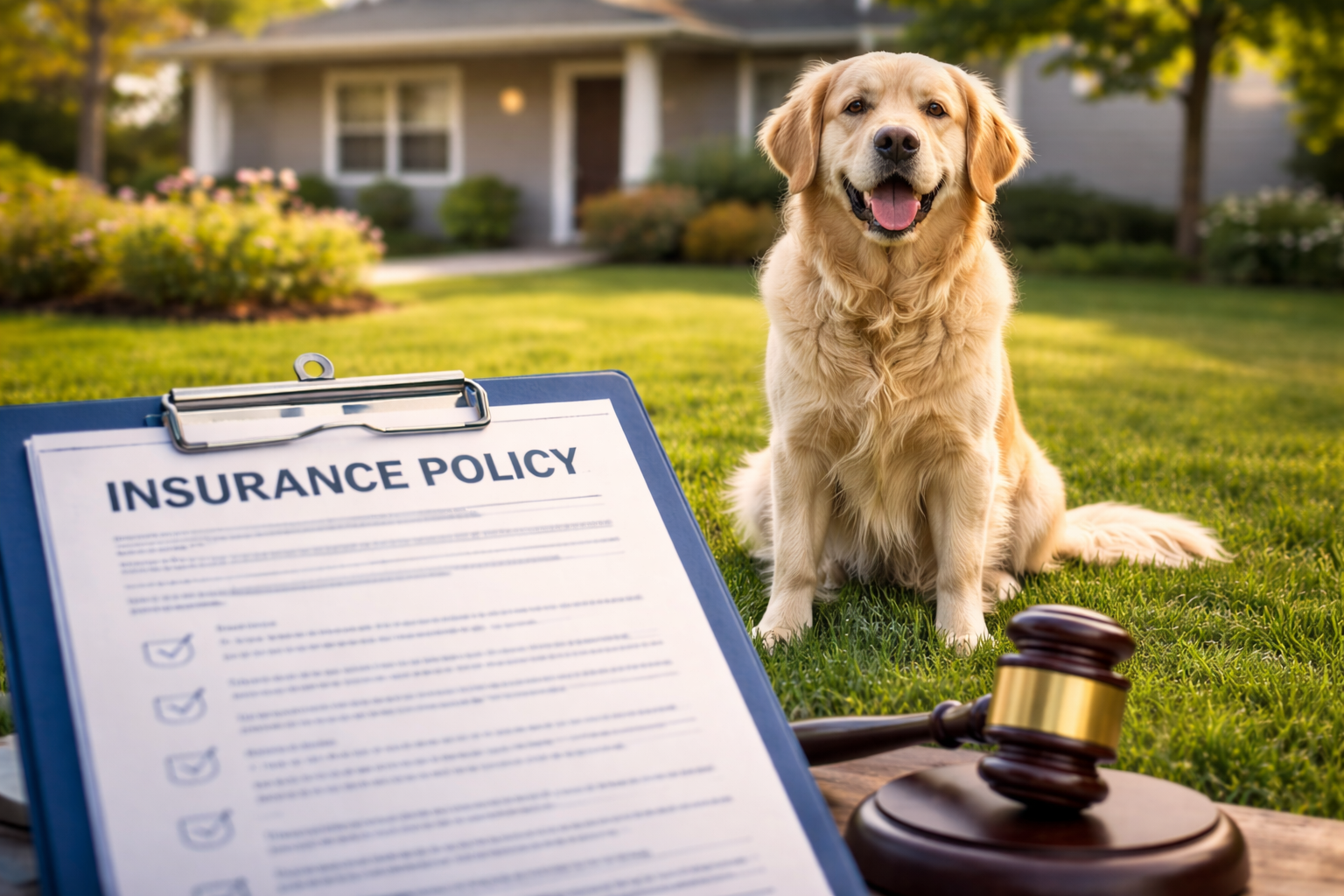
For millions of Americans, a house is not truly a home without a dog in the backyard or a cat asleep on the sofa. Pets are universally considered members of the family, providing unconditional love, security, and companionship. However, as we cross into the latter half of 2026, the intersection of pet ownership and property insurance has become a highly contentious financial battleground. In the cold, actuarial world of property and casualty insurance, your beloved Golden Retriever, energetic Husky, or rescue Pit Bull mix is not viewed with sentimentality. To an insurance underwriter, an animal is a highly unpredictable liability—a mobile, living risk vector capable of causing catastrophic bodily injury and triggering multi-million dollar lawsuits.
The statistics explain the industry's deep-seated anxiety. According to joint data from the Insurance Information Institute (III) and major carriers like State Farm, dog bites and dog-related injuries consistently account for more than one-third of all homeowners insurance liability claim dollars paid out annually. Nationwide, the total cost of these claims exceeds $1 billion every single year.
Even more concerning for insurers is the skyrocketing severity of these claims. The average cost per dog bite claim has surged past $65,000. This is not because dogs are biting more frequently, but because the economic aftermath of a bite is more expensive. This spike is driven by the inflation of medical and reconstructive surgery costs, and the aggressive rise of "nuclear verdicts" in personal injury courts, where juries are awarding massive sums for emotional distress and permanent scarring.
In response to this billion-dollar bleeding, insurance carriers have aggressively tightened their underwriting guidelines. They have implemented strict "breed blacklists," instituted zero-tolerance policies for animals with a bite history, and in some cases, quietly slipped total "Animal Liability Exclusions" into standard renewal contracts.
This exhaustive masterclass will decode the complex, emotional, and highly legalistic world of pet liability insurance. We will explain exactly how your standard policy covers (and limits) animal incidents, dissect the controversial "Dangerous Breed" lists, explore the legal realities of Strict Liability vs. the "One Bite Rule," and provide a strategic roadmap for securing standalone coverage if your pet is rejected by the standard market.
Part 1: The Foundation—How Standard Policies Handle Pets
To understand your financial exposure as a pet owner, you must first understand the default settings of the insurance contract. If you own a standard HO-3 Homeowners Policy, an HO-4 Renters Policy, or an HO-6 Condo Policy, your pet is generally addressed under two specific sections of the policy.
Coverage E: Personal Liability (The Heavy Shield)
This is your primary defense against financial ruin. If your dog bites a neighbor, knocks over a delivery driver causing them to break their hip, or escapes your yard and causes a cyclist to swerve into traffic, your Personal Liability coverage kicks in.
- The Scope: It pays for the injured party's medical bills, lost wages, and "pain and suffering" settlements. Crucially, it applies whether the incident happens on your property or off your property (e.g., at the dog park).
- The Duty to Defend: As we emphasized in our guide to understanding personal injury and liability, the most valuable part of Coverage E is the "duty to defend." If you are sued, the insurance company will hire a defense attorney and cover all legal fees, which can easily exceed $50,000 just to get through the discovery phase of a lawsuit. These legal fees are paid in addition to your policy limit.
Coverage F: Medical Payments to Others (The Goodwill Gesture)
This is a smaller, "no-fault" coverage typically set between $1,000 and $5,000.
- The Purpose: If a visiting friend is playing with your dog and accidentally gets scratched or nipped, requiring a quick trip to urgent care for stitches, Coverage F pays those immediate medical bills without the injured person needing to sue you or prove you were negligent. It is designed to act as a "goodwill gesture" to prevent a minor incident from escalating into a major Coverage E lawsuit.
Part 2: The Dreaded "Breed Blacklist" (Restricted Breeds)
While Coverage E and F sound comprehensive, they are entirely dependent on whether the insurance company agrees to insure your specific dog. This brings us to the most controversial topic in pet liability: Breed Restrictions.
Most insurance companies maintain a list of "ineligible" or "dangerous" breeds. If you own one of these breeds, the insurer will either refuse to write a policy for your home entirely, or they will write the policy but add a specific endorsement excluding all liability coverage for that animal.
Why Do Insurers Ban Specific Breeds?
Insurers claim their blacklists are not based on media hysteria, but on actuarial data. They argue that while any dog can bite, certain breeds possess a genetic combination of size, jaw strength (bite force PSI), and prey drive that makes their bites statistically more likely to result in catastrophic, high-dollar injuries (such as reconstructive plastic surgery or permanent nerve damage).
The Standard 2026 Restricted Breed List:
While lists vary by carrier, the following breeds (and any mixed breed containing their DNA) are almost universally flagged by standard underwriters:
- Pit Bull Terriers (Staffordshire Terriers)
- Rottweilers
- Doberman Pinschers
- Chows / Akita
- German Shepherds
- Mastiffs
- Great Danes
- Presa Canarios
- Alaskan Malamutes
- Siberian Huskies
- Wolf Hybrids
The "Mixed Breed" and Rescue Dilemma
In 2026, the majority of dogs adopted from shelters are mixed breeds. If your vet paperwork says "Terrier Mix" or "Lab Mix," but the dog bears physical characteristics of a restricted breed, an insurance inspector will flag it. In disputes, some carriers now demand expensive canine DNA tests to prove a dog does not contain restricted genetics. If you lie on your insurance application about your dog's breed to get coverage, the insurer will deny the claim for material misrepresentation when a bite occurs.
Part 3: The Legal Landscape—Strict Liability vs. The "One Bite" Rule
Your insurance rates and the likelihood of a lawsuit depend heavily on the state laws where you live. The legal standard for dog bites in the U.S. is divided into two primary camps.
1. "Strict Liability" States (The Majority)
In states like California, Florida, and Illinois, pet owners are held strictly liable for any injury their dog causes, regardless of the dog's past behavior.
- The Reality: It does not matter if your dog has been an angel for ten years and never growled at a fly. If they bite someone, you are legally and financially responsible. In these states, having high Personal Liability limits is absolutely mandatory.
2. The "One Bite" Rule States
In a shrinking minority of states (like Texas and Virginia), the law offers owners a degree of leniency. The "One Bite Rule" dictates that an owner is only liable if they knew or should have known that the dog had aggressive tendencies.
- The "Free" Bite: Historically, this meant the dog got "one free bite" before the owner was considered negligent. However, in 2026, plaintiffs' attorneys easily bypass this by proving the owner knew the dog barked aggressively at the mailman or lunged at other dogs, thereby establishing "prior knowledge" of danger.
The C.L.U.E. Report Death Sentence
Regardless of your state's laws, the insurance industry has its own "One Bite Rule." If your dog bites someone and you file a claim, that incident goes onto your CLUE (Comprehensive Loss Underwriting Exchange) report. Once a dog has a documented bite history, they are universally uninsurable in the standard market, regardless of their breed. Your current insurer will non-renew you, and other standard carriers will reject you.
Part 4: The Tenant Trap—Renters, Landlords, and Vicarious Liability
The complexity of pet liability multiplies exponentially when renting a property.
For the Renter
Many renters assume that if their dog bites someone in the apartment building courtyard, the landlord's insurance will cover it. This is false. You, as the owner of the dog, are primarily liable. If you do not carry Renters Insurance (HO-4) with adequate liability limits, a lawsuit will target your personal savings and future wage garnishments.
For the Landlord (Vicarious Liability)
If you are a real estate investor, you must read this carefully. Why are landlords so strict about banning dogs or implementing breed restrictions? Because of Vicarious Liability.
- The Nightmare Scenario: A tenant’s uninsured Pit Bull attacks a child in the common area of your duplex. The victim's family realizes the tenant has no money to sue for. The plaintiff's attorney will then turn around and sue YOU, the landlord, arguing that you were negligent for allowing a dangerous breed to live on your property.
- The Landlord Defense: As we detailed in our guide to Landlord (DP-3) Insurance, you must absolutely mandate that your tenants carry renters insurance with high liability limits and name you as an "Additional Interest" on the policy. Furthermore, if your DP-3 policy excludes animal liability, you must strictly ban pets to protect your real estate equity.
The Airbnb / Short-Term Rental Gap
If you allow guests to bring pets to your Airbnb, you are entering a massive liability void. As we explained in The Airbnb Gap, standard policies exclude business use. If a guest's dog bites a neighbor, your standard homeowners policy will deny the claim, and platform guarantees like AirCover are notoriously unreliable for third-party animal liability. You need a commercial short-term rental policy that explicitly includes animal liability.
Part 5: Strategic Solutions—How to Insure the "Uninsurable" Dog
If you own a restricted breed, or if your dog has a minor bite history, you are not out of options. You simply have to leave the automated online quoting systems and take a strategic, professional approach to your risk management.
Strategy 1: Find the "Breed-Neutral" Carriers
Not all insurance companies use blacklists. A small handful of major carriers evaluate dogs based on their individual history rather than their genetics.
- The Saviors: Companies like State Farm, USAA (if you qualify through military service), and Amica are famous in the industry for not denying coverage based solely on the breed of the dog. They will ask if the dog has a bite history; if the answer is no, they will issue the policy.
- The Broker Advantage: This is where using an independent broker pays off. A broker knows exactly which regional and national carriers in your specific state do not enforce breed blacklists.
Strategy 2: Standalone Canine Liability Insurance
If you cannot find a homeowners policy that will cover your dog (or if you don't want to switch your home and auto bundle), you can purchase a dedicated, standalone Animal Liability Policy.
- How it Works: Companies like Einhorn Insurance or the Federation of Insured Dog Owners (F.I.D.O.) offer policies specifically designed for high-risk breeds or dogs with a bite history.
- The Mechanics: You keep your home insured with your current carrier, and sign a document acknowledging the animal exclusion. Then, you buy the standalone policy (usually costing $300 to $1,000+ per year depending on the dog's history) to cover the dog. If a bite occurs, the standalone policy pays the claim, protecting your homeowners policy from a massive rate hike.
Strategy 3: The Legislative Shift
In recent years, animal advocacy groups have successfully lobbied several state governments to ban breed discrimination in insurance. States like New York, Nevada, and Illinois have passed laws preventing insurers from denying a homeowners policy or raising rates based solely on the breed of a dog. If you live in one of these states, you have significantly more leverage during your annual insurance audit.
Part 6: The Umbrella Policy Trap
Many affluent homeowners assume that their Personal Umbrella Policy will automatically cover a massive dog bite lawsuit. This is a fatal error.
- The Underlying Requirement: Umbrella policies are "excess" coverage. They require you to have active, underlying coverage on your primary homeowners policy.
- The Trap: If your homeowners policy contains an Animal Liability Exclusion because you own a Rottweiler, and that Rottweiler bites someone, your primary policy denies the claim. Because there is no underlying coverage, your $2 Million Umbrella Policy will also deny the claim, leaving your entire net worth exposed. You must ensure your primary policy covers the dog for the Umbrella to be effective.
Conclusion: Love Your Pet, Manage Your Risk
Owning a dog is one of life's greatest joys, but in the modern legal and economic landscape, it is also a profound financial responsibility. The insurance industry’s stance on canine liability is rigid, unforgiving, and driven by billions of dollars in losses. You cannot rely on the hope that your dog "would never hurt anyone." Animals are unpredictable, and accidents happen in the blink of an eye.
Protecting your family's financial future requires moving past the emotional defense of your pet and adopting the mindset of a risk manager. Perform a surgical audit of your current homeowners or renters policy today. Search the endorsements page specifically for "Animal Liability Exclusion" or "Canine Restrictions." If you find a gap, use the strategies outlined above to close it.
Whether it involves switching to a breed-neutral carrier like State Farm, purchasing a standalone canine liability policy, or aggressively lobbying your landlord with a rock-solid renters policy, the tools to protect your assets exist. At Surety Insights, we believe that Clarity is Coverage. Don't let an unforeseen accident force you to choose between your financial solvency and the pet you love. Secure your liability shield, train your dog responsibly, and enjoy the peace of mind that true coverage brings.
Share this article
About the Author
Adams Kotel
Lead Insurance Analyst
Adams has over 15 years of experience in the insurance industry, specializing in personal line products. He is passionate about demystifying complex insurance topics and helping consumers make educated decisions.
Related Articles

How Much HO-6 Dwelling Coverage is Needed for a 2,053 Square Ft Condo? (A Mathematical Case Study)
Calculating condo insurance isn't a guessing game. We break down the exact math for a 2,053 sq ft luxury condo, explaining "Coverage A," local construction costs, and the dangers of underinsuring a high-end unit.
Adams Kotel

The HO-6 Policy Training Outline: A Masterclass for New Condo Owners
An structured, step-by-step training outline designed to take you from a condo insurance novice to an HO-6 expert. Learn to decode master policies, calculate coverage, and protect your equity.
Adams Kotel