Scheduled Personal Property Insurance: A Complete Guide
Adams Kotel
Published on
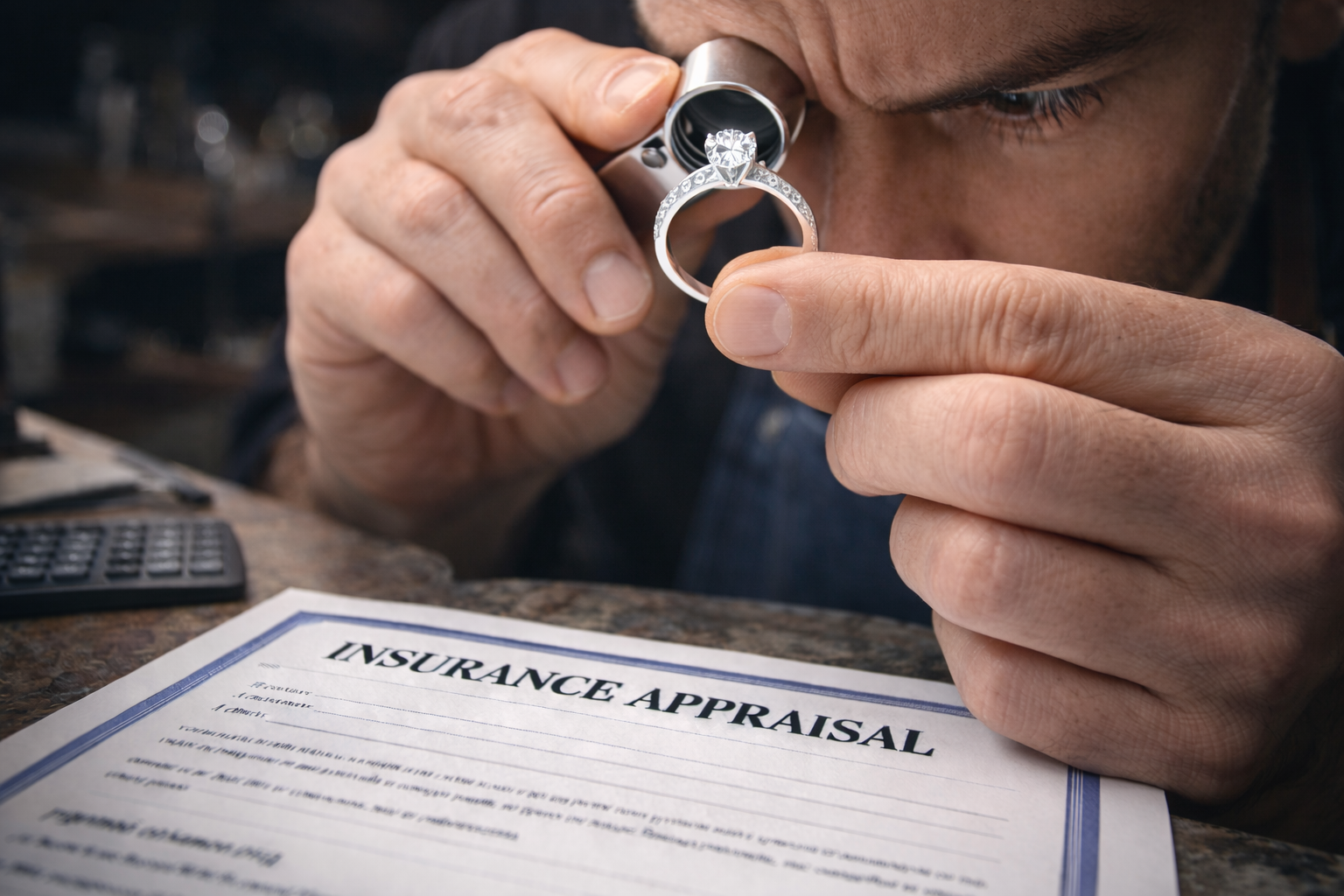
You have just made a significant investment. Perhaps you purchased a brilliant-cut diamond engagement ring, finally acquired the vintage luxury watch you’ve been eyeing for a decade, or inherited a collection of rare, mid-century fine art from your grandparents. You bring these prized possessions into your home, lock the front door, and feel a deep sense of security. After all, you pay your homeowners insurance premiums on time every month. You have "full coverage." If a burglar breaks in or a fire tears through the house, your insurance company will write a check to replace your valuables, right?
Statistically, you are likely wrong, and that assumption could cost you tens of thousands of dollars.
There is a pervasive and dangerous myth in the world of personal finance that a standard homeowners, renters, or condo insurance policy provides blanket, unlimited protection for everything inside your walls. The reality of insurance contracts in 2026 is far more restrictive. Standard property insurance is designed to cover standard, everyday items—clothing, standard electronics, basic furniture, and kitchenware. It is categorically not designed to cover high-value luxury goods, rare collectibles, or fine jewelry without explicit, negotiated agreements in advance.
When high-net-worth individuals or even average families with a few heirloom pieces discover this gap, it is usually during the worst possible moment: after a devastating loss. The insurance adjuster arrives, reviews the police report regarding the stolen $15,000 engagement ring, and calmly points to page 12 of the policy contract, explaining that the maximum payout for stolen jewelry is capped at $1,500.
To bridge this massive financial chasm, the insurance industry utilizes a specific endorsement known as Scheduled Personal Property (SPP). Sometimes referred to as a "Personal Articles Floater" or an "Itemized Rider," this coverage is the only way to guarantee your most valuable possessions are fully protected.
This exhaustive guide serves as the definitive manual for navigating scheduled personal property insurance in 2026. We will dissect the punitive "sub-limits" of standard policies, detail the strict appraisal requirements demanded by modern underwriters, explore the massive benefits of scheduling (including coverage for "Mysterious Disappearance"), and compare the best options on the market to ensure you are getting the absolute best value for your premium dollar.
Part 1: The Coverage C Trap—Why Your Standard Policy Fails You
To understand why you need to "schedule" an item, you must first understand how a standard HO-3 homeowners policy processes personal belongings.
Your belongings are protected under Coverage C (Personal Property). This limit is usually set at 50% to 70% of your total Dwelling coverage. If your home is insured for $500,000, you have $250,000 of coverage for your "stuff."
However, hidden within the fine print of Coverage C are "Special Limits of Liability." Because items like jewelry, watches, firearms, and cash are small, highly liquid, and incredibly easy to steal, insurers severely limit their exposure to them.
The Standard Sub-Limits (The 2026 Baseline):
While limits vary slightly by carrier, a standard, unendorsed policy typically enforces the following maximum payouts for loss by theft:
- Jewelry, Watches, and Furs: $1,500 maximum total payout.
- Firearms and Related Equipment: $2,500 maximum total payout.
- Silverware and Goldware: $2,500 maximum total payout.
- Cash, Bank Notes, and Bullion: $200 maximum total payout.
The Math of the Trap: If a burglar steals your $12,000 Rolex and your wife's $8,000 wedding band, your total loss is $20,000. Under a standard policy, the insurance company will hand you a check for $1,500, minus your $1,000 deductible. You will receive $500 for a $20,000 loss.
Part 2: What is Scheduled Personal Property?
Scheduling an item means removing it from the broad, limited bucket of "Coverage C" and insuring it on an individualized, itemized basis. You are essentially creating a mini-insurance policy for that specific object.
When you schedule an item, it is listed directly on your policy's Declarations Page with its own specific value. For example:
- Item 1: 1.5 Carat Round Cut Diamond Ring, Platinum Setting. Value: $14,500.
- Item 2: 2024 Rolex Submariner Ref. 124060. Value: $11,000.
By doing this, you override the $1,500 sub-limit completely. If the Rolex is stolen, the policy pays up to the $11,000 scheduled limit.
Part 3: The 5 Massive Benefits of Scheduling
Beyond simply raising the dollar limit, scheduling an item transforms how it is covered. The protections granted under a scheduled endorsement are vastly superior to standard property coverage.
1. Coverage for "Mysterious Disappearance"
This is arguably the greatest benefit of a scheduled policy. Standard homeowners insurance covers named perils: fire, wind, theft, etc. But what if your ring wasn't stolen? What if you were swimming in the ocean on vacation, and the ring simply slipped off your finger and sank? What if you took your watch off at the gym and accidentally left it on the counter, and when you returned, it was gone?
- Standard Policy: Denied. You cannot prove it was stolen, and "losing" an item is not a covered peril.
- Scheduled Policy: Covered. Most SPP endorsements cover "Mysterious Disappearance" or misplacement.
2. Zero Deductible
If your house is broken into and your TV is stolen, you must pay your standard homeowners deductible (e.g., $1,000 or $2,500) before the insurance pays anything, a strategy we discussed in our guide to deductibles. However, scheduled items almost always carry a $0 deductible. If your $5,000 scheduled necklace is lost, you get a check for $5,000. You pay nothing out of pocket to trigger the claim.
3. Broader Peril Protection (Accidental Damage)
Standard policies rarely cover you if you break your own belongings. If the diamond falls out of its setting because you bumped it against a granite countertop, a standard policy won't help. Scheduled coverage typically operates on an "Open Peril" basis, meaning it covers accidental breakage and damage, paying to repair the prongs and replace the lost stone.
4. Worldwide Coverage
Your homeowners policy is geographically tied to your address. While it offers some off-premises coverage, it can be limited. Scheduled property is covered globally. Whether your camera is stolen in a café in Paris or your watch is lost in a hotel in Tokyo, the item is fully protected.
5. Exemption from the Inflation Trap
If a fire destroys your home, your personal property claim is subject to the complex calculations of depreciation unless you have Replacement Cost coverage, which we outlined in our Replacement Cost vs. ACV guide. Scheduled items bypass this. The value is agreed upon upfront.
Part 4: The Strict Requirements—Appraisals and Provenance
Because the insurance company is agreeing to pay a specific, high-dollar amount with zero deductible and covering mysterious disappearance, their underwriting requirements for scheduled property in 2026 are exceptionally rigorous. You cannot simply tell the insurer, "My ring is worth $20,000." You must prove it.
The Appraisal Standard
For any item over a certain threshold (usually $2,500 or $5,000 depending on the carrier), you must submit a professional appraisal.
- Age of Appraisal: The appraisal must be recent—typically completed within the last 2 to 3 years. If you try to insure a ring using an appraisal from 2018, it will be rejected.
- Qualified Appraisers: The document must be generated by a certified professional. For jewelry, insurers look for Graduate Gemologists (GIA) or members of the American Gem Society (AGS).
- The Detail Required: A valid appraisal must include a microscopic description of the item: the carat weight, cut, color, clarity of stones, the weight of the metal, and high-resolution photographs.
The Receipt Alternative
If you purchased the item brand new within the last 12 to 18 months, most insurers will accept the detailed bill of sale or receipt in lieu of a formal appraisal.
Provenance for Fine Art and Antiques
If you are scheduling fine art, wine collections, or rare antiquities, the requirements deepen. Insurers may require a "Bill of Provenance" (the history of ownership) and an appraisal from an accredited member of the Appraisers Association of America (AAA). They need to verify that the piece is authentic and not a forgery.
Part 5: Blanket Coverage vs. Scheduled Coverage
As you perform your annual insurance audit, your agent might mention "Blanket Jewelry Coverage" as an alternative to scheduling. It is vital to understand the difference to find the best value.
- Blanket Coverage: You buy a "pool" of coverage, say $10,000 total for all jewelry, with a "per-item limit" of $2,500.
- Pros: You don't need appraisals for every single item. It is great for a large collection of mid-tier jewelry (e.g., ten $1,000 necklaces). You can buy and sell items without constantly updating your policy.
- Cons: It does not solve the problem of a single, high-value item. If you have a $10,000 blanket with a $2,500 per-item limit, and your $8,000 engagement ring is stolen, you still only get $2,500.
- Scheduled Coverage: As defined, it lists one specific item for one specific value. It is the only choice for individual items valued over $2,500.
Part 6: Best Options—Standalone Policies vs. Homeowners Riders
When looking for the best scheduled personal property insurance options, you have two primary structural choices.
Option A: Adding a Rider to Your Homeowners Policy
The most common method is simply adding the SPP endorsement to your existing homeowners, condo, or renters policy with carriers like State Farm, Travelers, or Allstate.
- The Value: It is convenient. You have one bill, one agent, and one renewal date. The cost is generally $1.00 to $2.00 per $100 of value. (e.g., Insuring a $10,000 ring will cost roughly $100 to $200 per year).
- The Risk: If you lose your ring and file a $10,000 claim on your homeowners policy, that claim goes onto your Comprehensive Loss Underwriting Exchange (C.L.U.E.) report. Your homeowners insurance premium could increase by 15% to 20% for the next three years because you are now statistically viewed as a "higher risk" property owner.
Option B: Standalone Specialty Policies (e.g., Jewelers Mutual)
You can purchase a completely separate policy solely for your valuables from a specialty carrier.
- The Value: The primary benefit is claim isolation. If you file a claim for a lost watch on a standalone policy, it does not impact your homeowners insurance rates. Given how expensive home insurance is in 2026, protecting your home claims history is paramount.
- The Expertise: Specialty carriers often allow you to work with your own jeweler for a replacement, whereas standard home carriers may force you to use their "network" replacement companies.
Option C: High-Net-Worth Carriers (The 150% Rule)
If you have significant wealth, transitioning your entire portfolio to a High-Net-Worth (HNW) carrier like Chubb, PURE, or Cincinnati Insurance is the ultimate option.
- The Value: These carriers offer a feature called "Agreed Value with Market Appreciation." If your scheduled $50,000 Rolex is stolen, but the market value of that discontinued watch has skyrocketed to $70,000 since your last appraisal, a standard carrier will only pay the scheduled $50,000. HNW carriers will often pay up to 150% of the scheduled amount to ensure you can actually replace the item at current market prices.
Part 7: Market Trends in 2026—Why Appraisals Expire Faster
The economic realities of 2026 make scheduled property insurance more dynamic than ever. You cannot simply schedule an item once and forget about it for a decade. The value of luxury goods is highly volatile, which requires active management.
The Luxury Watch Boom and Correction
The secondary market for luxury watches (Rolex, Patek Philippe, Audemars Piguet) saw unprecedented spikes in the early 2020s, followed by market corrections. If you insured a steel sports watch in 2022 for its massive secondary market price ($30,000), but its replacement cost in 2026 has settled to $20,000, you are overpaying for insurance premiums. Conversely, if you insured it at retail price in 2019, you are drastically underinsured today.
The Lab-Grown Diamond Disruption
The jewelry market has been permanently altered by the widespread adoption of lab-grown diamonds. Because lab-grown stones are chemically identical to mined diamonds but cost 70% to 80% less, the cost to "replace" a diamond has become bifurcated. If you schedule a natural, mined diamond, your appraisal must explicitly state that it is natural. Otherwise, in the event of a claim, an aggressive insurer might attempt to settle the claim based on the cost of a lab-grown replacement, claiming it is of "like kind and quality."
Fine Art and Inflation
Art does not depreciate like a car driving off a lot; it is an alternative asset class. In an inflationary environment, the value of fine art and collectibles often rises sharply. An appraisal from 2021 is functionally obsolete in 2026.
Part 8: The Appraisal Audit Protocol
To ensure your scheduled personal property insurance provides actual value and not just an illusion of safety, you must perform a biennial Appraisal Audit.
- Pull Your Declarations Page: Look at the Scheduled Property list.
- Check the Dates: If any appraisal on file with your insurer is older than three years, contact your jeweler or appraiser.
- Request an "Update": You usually do not need a full, expensive re-appraisal from scratch. Most jewelers will perform an "Appraisal Update" for a nominal fee, adjusting the replacement value based on current gold and diamond indices.
- Adjust the Policy: Submit the updated appraisals to your agent. If the values went up, your premium will rise slightly, but you eliminate the risk of a shortfall. If the values went down, you save money on your monthly bill.
Conclusion: Securing Your Legacy
A standard homeowners policy is designed to protect the structural integrity of your house and the basic necessities of your daily life. It is an industrial tool. But the items that carry the most financial density—and the most profound emotional resonance—require a surgical approach to risk management.
Scheduled Personal Property insurance is not just an endorsement; it is the financial recognition of an item's true worth. It is the peace of mind knowing that if an engagement ring slips into the ocean, or if a multi-generational heirloom is stolen from a hotel safe, the financial value of that legacy is unconditionally protected without a deductible, without depreciation, and without a fight.
As you conduct your financial planning for 2026, do not let your most valuable assets hide in the dangerous shadows of Coverage C sub-limits. Gather your receipts, hire a certified appraiser, and take the proactive step to schedule your valuables. Whether you choose to add a rider to your current policy or seek out a standalone specialty carrier, ensure that your protection is as flawless as the items you are protecting. Store your appraisals safely, update them regularly, and wear your investments with absolute confidence.
Share this article
About the Author
Adams Kotel
Lead Insurance Analyst
Adams has over 15 years of experience in the insurance industry, specializing in personal line products. He is passionate about demystifying complex insurance topics and helping consumers make educated decisions.
Related Articles

How Much HO-6 Dwelling Coverage is Needed for a 2,053 Square Ft Condo? (A Mathematical Case Study)
Calculating condo insurance isn't a guessing game. We break down the exact math for a 2,053 sq ft luxury condo, explaining "Coverage A," local construction costs, and the dangers of underinsuring a high-end unit.
Adams Kotel

The HO-6 Policy Training Outline: A Masterclass for New Condo Owners
An structured, step-by-step training outline designed to take you from a condo insurance novice to an HO-6 expert. Learn to decode master policies, calculate coverage, and protect your equity.
Adams Kotel