A Guide to Common Car Insurance Discounts
Adams Kotel
Published on

Car insurance is a mandatory expense for nearly every driver in the country. While you can't avoid the need for coverage, you certainly don't have to accept a high premium as a fact of life. Insurance companies offer a wide and often confusing array of discounts to attract and retain safe, low-risk customers. The problem is, these discounts are rarely applied automatically. It's up to you, the consumer, to be proactive, ask the right questions, and ensure you're getting every single price break you're entitled to.
Stacking multiple discounts is one of the most powerful strategies for lowering your auto insurance bill. A single discount might only save you 5%, but combining four or five of them can lead to a premium reduction of 25% or more, translating into hundreds of dollars in annual savings.
This comprehensive guide will walk you through the most common and impactful car insurance discounts available. We'll categorize them into four main areas: Driver-Based Discounts, Policy-Based Discounts, Vehicle-Based Discounts, and Affiliation Discounts. Use this as a checklist to review with your insurance agent and start saving money today.
I. Driver-Based Discounts: Rewarding Safe Habits
These discounts are based on your personal characteristics, your driving history, and your commitment to safety.
1. Safe Driver / Good Driver Discount
This is one of the most significant discounts available. It rewards you for maintaining a clean driving record free of at-fault accidents, moving violations (like speeding tickets), and DUIs. The look-back period is typically three to five years. This discount is fundamental because it proves to the insurer that you are a low-risk client.
2. Defensive Driving Course Discount
Many insurers offer a discount (often 5% to 10%) for voluntarily completing an approved defensive driving course. This is especially valuable for two groups: senior citizens, who may be required to take a refresher course to prove their skills, and younger drivers looking to offset their high initial rates. In some states, completing a course can also remove points from your driving record after a ticket.
3. Good Student Discount
This is a must-have for families with high-school or college-age drivers. If your young driver maintains a "B" average (a 3.0 GPA) or better, or ranks in the top 20% of their class, they can qualify for a substantial discount, often up to 15% or more. The logic is that students who are responsible in their studies are also more likely to be responsible behind the wheel. You will need to provide a report card or transcript to your insurer as proof.
4. Student Away at School Discount
If you have a college student on your policy who attends school more than 100 miles away from home and does not take a car with them, you can receive a significant discount. The insurer recognizes that the student's driving will be limited to holidays and summer breaks, dramatically reducing their risk.
II. Policy-Based Discounts: Smart Ways to Structure Your Coverage
These discounts relate to how you structure your insurance policy and your relationship with the company.
5. Multi-Policy / Bundling Discount
As we cover in our guide to the benefits of bundling, this is often the single largest discount available. By purchasing your auto insurance and your home, renters, or condo insurance from the same company, you can receive a discount of up to 25% on your premiums. Insurers love the loyalty that comes with multiple policies and reward it generously.
6. Multi-Car Discount
If you insure more than one vehicle with the same company, you will almost always receive a multi-car discount. The discount applies to the liability, collision, and comprehensive coverages for each car on the policy.
7. Paid-in-Full Discount
Insurance companies save on administrative costs when you pay your premium in one lump sum rather than in monthly installments. They pass these savings on to you in the form of a paid-in-full discount, which is often around 5% to 10%. If you can afford to pay your six-month or annual premium upfront, it's an easy way to save.
8. Paperless / Auto-Pay Discount
Another easy discount to get. By agreeing to receive your bills and policy documents electronically (paperless) and setting up automatic payments from your bank account or credit card (auto-pay), you can often get a small but effortless discount.
9. Loyalty / Long-Term Customer Discount
Some insurance companies reward customers for sticking with them. If you'vebeen with the same insurer for three to five years or more, ask if they offer a loyalty discount.
III. Vehicle-Based Discounts: The Car You Drive Matters
These discounts are related to the safety and security features of your vehicle.
10. Anti-Theft Device Discount
If your car is equipped with anti-theft devices, you can earn a discount on your comprehensive coverage. The discount amount varies by the type of device:
- Passive Devices: Things that activate automatically, like an engine immobilizer, earn a larger discount.
- Active Devices: Things you have to arm yourself, like a car alarm, earn a smaller discount.
- Tracking Systems: A GPS-based vehicle recovery system like LoJack can also provide a discount.
11. Vehicle Safety Features Discount
Modern cars are packed with safety features that help prevent accidents or reduce their severity. Insurers reward you for having them. Common features that can earn a discount include:
- Anti-lock brakes (ABS)
- Airbags (especially side-curtain and knee airbags)
- Daytime running lights
- Electronic stability control (ESC)
- Newer technologies like blind-spot monitoring, lane-departure warnings, and automatic emergency braking (AEB) are also beginning to earn discounts from some carriers.
12. New Car Discount
Some companies offer a small discount if your vehicle is less than three years old, under the theory that newer cars have better safety features and are less prone to mechanical failure.
IV. Affiliation Discounts: Leveraging Your Groups
These discounts are based on your membership in certain professional organizations, alumni associations, or other groups.
13. Employer or Group Discount
Many large employers, universities, and professional associations (e.g., for teachers, engineers, or nurses) have negotiated special group insurance rates with specific carriers. Ask your HR department or your association's member benefits office if they have a partnership with an insurance company.
14. Military and Federal Employee Discount
Many of the largest national insurers offer special discounts for active-duty military members, veterans, and federal government employees.
How to Get the Discounts You Deserve
The most important lesson is that you have to ask. Never assume a discount has been applied.
- Do an Annual Review: Once a year, sit down with your policy declarations page and your insurance agent (or a customer service representative). Go through this list of discounts one by one and ask, "Am I receiving this discount? If not, do I qualify?"
- Inform Your Insurer of Changes: Did you install a new security system? Did your teenager make the honor roll? Did you retire from your job? Life changes can trigger new discounts, but only if you tell your insurer about them.
- Shop Around: When you'regetting competitive quotes, make sure to ask each company for a full list of their available discounts. The company with the most aggressive discount program may end up being your cheapest option.
Conclusion
Your car insurance premium is not a fixed price. It's a complex calculation with many moving parts, and discounts are your primary tool for taking control of the equation. By being a proactive, informed consumer—by driving safely, choosing your car wisely, and, most importantly, asking for every single discount you are entitled to—you can ensure you are not leaving any money on the table. A simple phone call to your agent could unlock hundreds of dollars in savings, making the essential protection of car insurance significantly more affordable.
Share this article
About the Author
Adams Kotel
Lead Insurance Analyst
Adams has over 15 years of experience in the insurance industry, specializing in personal line products. He is passionate about demystifying complex insurance topics and helping consumers make educated decisions.
Related Articles

Usage-Based Car Insurance Apps: Are They Really Worth It in 2026?
Car insurance apps promise massive discounts if you let them track your driving. But how accurate are they at detecting hard braking or phone use? We analyze the data, privacy risks, and real-world savings in 2026 to see if UBI apps are worth it.
Josef Bako
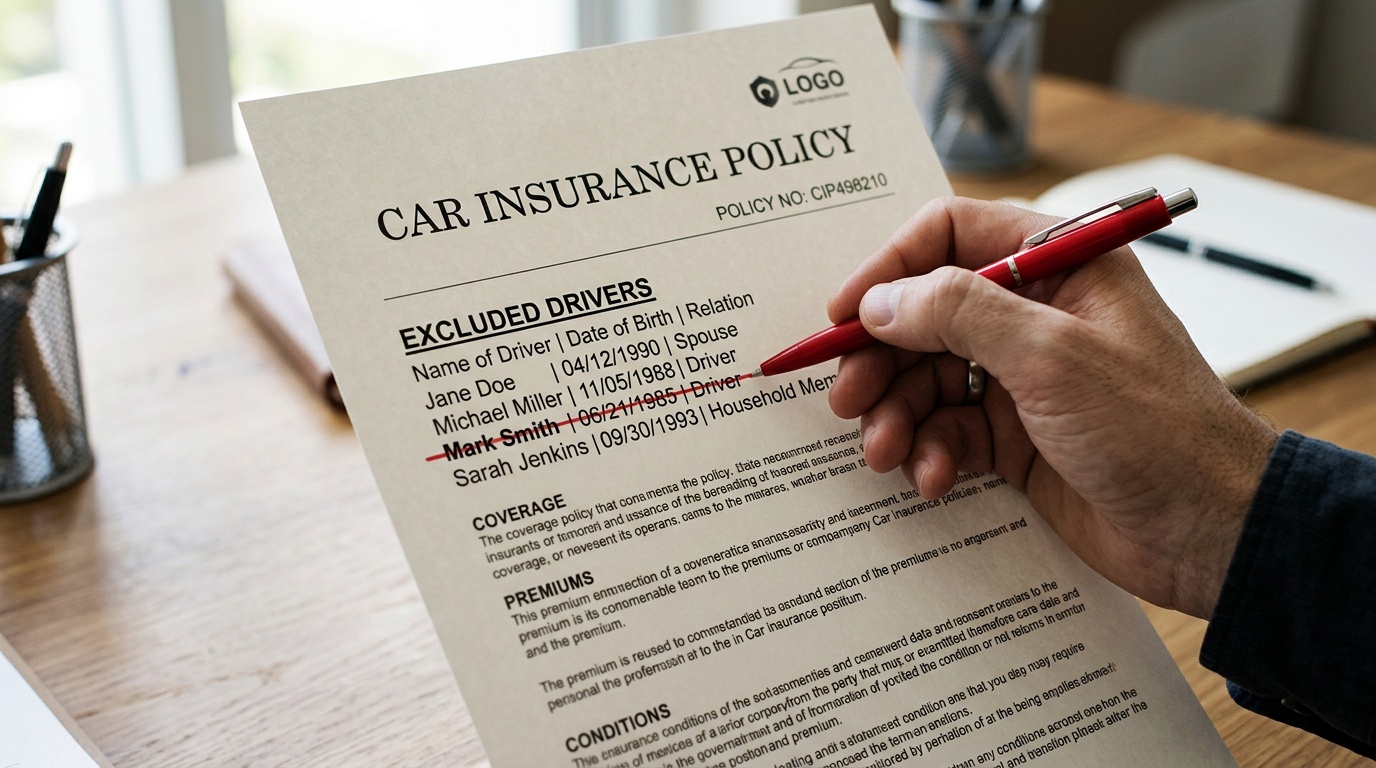
The Named Driver Exclusion: Saving Your Auto Insurance Rate
Is a high-risk roommate or a teenager with a DUI ruining your car insurance rate? Learn how the "Named Driver Exclusion" can instantly lower your premium—and the catastrophic risks of using it incorrectly.
Marcus Seneki