The Usage-Based Revolution: Are Plug-In Devices Dead? (OEM Guide)
Josef Bako
Published on
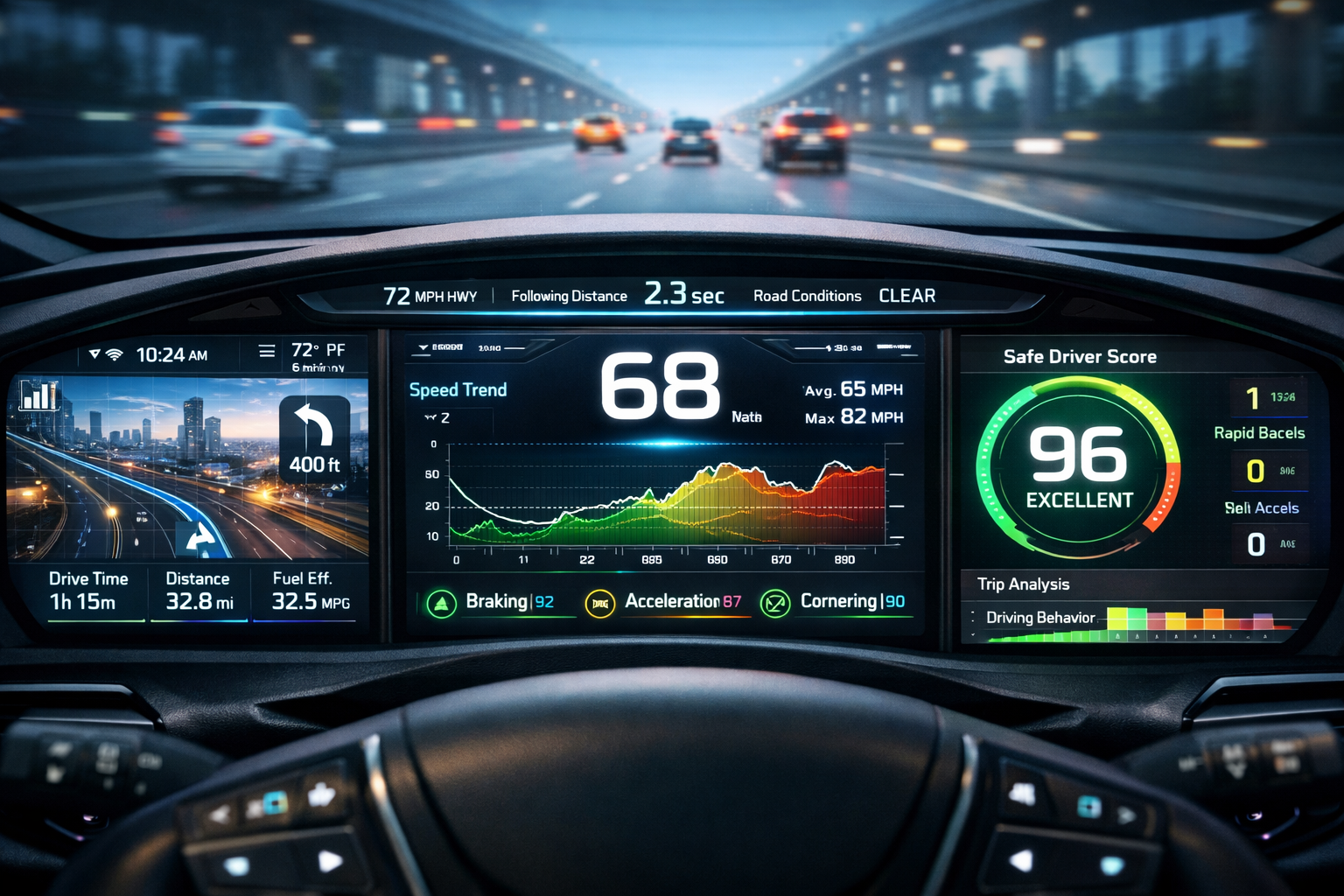
For the better part of a decade, the symbol of the "Usage-Based Insurance" (UBI) revolution was a small, plastic piece of hardware. To get a discount on your car insurance, you had to wait for a package in the mail, crawl under your steering wheel, and plug a "dongle" into your car’s OBD-II port. It was clunky, it was intrusive, and it felt like installing a wiretap in your own vehicle.
In 2026, that era is effectively over. The "Plug-In" device is rapidly becoming a relic, replaced by a seamless, invisible stream of data that flows directly from your car’s built-in modem to the insurance company’s cloud servers. This is the era of OEM (Original Equipment Manufacturer) Telematics.
Today, if you buy a new Ford, GM, Toyota, or Tesla, you are driving a "Connected Car." The vehicle is already recording your speed, your braking habits, your cornering G-forces, and even your seatbelt usage. When you sign up for insurance, you don't need a device; you simply click "I Agree" on an app, and the data pipe is opened.
This technological leap offers immense convenience and precision, but it also raises profound questions about privacy and data ownership. Who owns the driving data—you, the carmaker, or the insurer? Can your "Safe Driver" score be sold to third parties? And if you choose to opt-out of this surveillance, will you be penalized with unfordable premiums?
This exhaustive guide will explore the new landscape of embedded telematics. We will analyze the decline of the OBD-II dongle, the controversial role of data brokers like LexisNexis, and the specific "Privacy vs. Discount" calculation every driver must perform in 2026. If you are considering a UBI program to lower your rising premiums, this is the essential manual you need to read before you click "Accept."
Part 1: The Death of the Dongle and the App
As we discussed in our hardware comparison of Dongle vs. App, the industry has been moving toward software solutions for years. But even smartphone apps have flaws: they drain batteries, they rely on imperfect GPS signals, and they struggle to tell if you are the driver or a passenger.
OEM Embedded Telematics solves all of these problems.
- Precision: The data comes directly from the car's ECU (Engine Control Unit). It knows exactly how hard you pressed the brake pedal, down to the millisecond. It knows if the ABS system engaged. It knows if you were speeding because it compares your speedometer to the car's internal map database.
- Identity: It solves the "Passenger Problem." If the data comes from your car, the insurer knows you (or someone you authorized) was driving. There is no need to manually tag trips as "I was in an Uber."
- Frictionless: There is no hardware to mail back. There is no app to keep open in the background. It just works.
Part 2: The "Data Broker" Controversy
In late 2024 and 2025, a massive scandal rocked the auto industry. Investigations revealed that several major automakers were sharing driver data with data brokers (like LexisNexis and Verisk) without clear consumer consent. This data was then sold to insurance companies, who used it to raise rates on drivers who had never signed up for a UBI program.
While regulations have tightened in 2026, the ecosystem is still complex.
- The "Usage" Score: When you apply for insurance now, the carrier doesn't just pull your credit score and driving record (MVR). They pull your "Telematics Score" from a central exchange.
- The Opt-In Trap: Often, the consent to share this data is buried in the "Connected Services" agreement you sign at the dealership when setting up your Bluetooth or remote start app. You might think you are enabling "Remote Keyless Entry," but you are also enabling "Data Sharing with Strategic Partners."
Action Step: Review your vehicle's privacy settings in the manufacturer's app. Look for "Driving Data," "Smart Driver," or "Insurance Connect" and verify if it is toggled "On."
Part 3: The "Discount vs. Surcharge" Shift
Historically, UBI was a "discount-only" program. If you drove safely, you saved money. If you drove poorly, your rate stayed the same. It was a no-lose bet.
In 2026, that model has inverted. With the granular data available from OEM systems, insurers are moving toward "Surcharge Models."
- The New Deal: If you drive unsafely (frequent speeding over 80mph, hard braking, late-night driving), your premium can actually increase at renewal.
- The Logic: Insurers argue that this is the fairest way to price risk. Why should a safe driver subsidize a reckless one?
- The Risk: If you live in a city with erratic traffic that forces you to brake hard to avoid accidents, the algorithm might unfairly penalize you. As we noted in our EV insurance guide, electric vehicles with regenerative braking can sometimes trigger false "hard braking" events in older telematics models.
Part 4: The Privacy Trade-Off—Is 30% Worth It?
The financial argument for UBI is compelling. With base rates rising by 20% annually due to social inflation and repair costs, a 30% telematics discount is often the only way to keep premiums affordable.
But what are you giving up?
- Location Data: The insurer knows everywhere you go. They know you park at a bar every Friday night. They know you visit a cancer treatment center. While they claim this data is "anonymized" or used only for "aggregate risk," privacy advocates warn of "function creep."
- Claim Adjudication: This is the most dangerous frontier. If you are in an accident, the insurer can pull your telematics data to see your speed at the moment of impact. * Scenario: You are hit by another driver who ran a red light. You file a claim. The insurer pulls your data and sees you were going 46mph in a 45mph zone. They might use that data to assign you 1% contributory negligence, reducing your payout.
Part 5: Which Cars Have the Best Integration?
Not all OEMs play nicely with all insurers.
- Tesla: The gold standard. Their "Safety Score" is fully integrated into their own insurance product. It rewards "Forward Collision Warning" avoidance and penalizes "Aggressive Turning."
- GM (OnStar): Deeply integrated with carriers like Progressive and Travelers.
- Ford/Toyota: Have robust APIs that allow you to share data with multiple carriers to "shop" your driving score for the best rate.
Part 6: How to Protect Yourself in the Age of Surveillance
If you choose to participate in OEM telematics, you must treat it like a credit score.
- Monitor the Score: Most manufacturer apps show you your "Driving Score." Check it weekly. If it drops, figure out why.
- Dispute Errors: If your EV's regenerative braking is logging false negatives, contact the insurer's UBI support team immediately.
- Shop Your Data: Don't be loyal. If State Farm gives you a bad score, try Allstate. Different carriers weigh the data points differently. One might hate night driving; another might not care.
Conclusion: The Inevitable Future
The "Plug-In" device is dead because it was a bridge technology. The car is the device now. In the near future, buying insurance without sharing data will likely become prohibitively expensive—a "Privacy Tax" for those who refuse to be monitored.
By understanding the mechanics of OEM telematics, checking your data privacy settings, and driving with "algorithmic awareness," you can survive this transition. You can secure the discounts you deserve without unknowingly handing over the keys to your digital life. At Surety Insights, we believe Clarity is Coverage. In 2026, clarity means knowing exactly who is watching you drive, and how much they are paying you for the privilege.
Share this article
About the Author
Josef Bako
Auto Safety & Risk Consultant
Josef is a former automotive safety engineer who transitioned into insurance risk assessment. He specializes in helping families navigate the high costs of insuring teen drivers and understanding vehicle safety ratings.
Related Articles

Usage-Based Car Insurance Apps: Are They Really Worth It in 2026?
Car insurance apps promise massive discounts if you let them track your driving. But how accurate are they at detecting hard braking or phone use? We analyze the data, privacy risks, and real-world savings in 2026 to see if UBI apps are worth it.
Josef Bako
The Named Driver Exclusion: Saving Your Auto Insurance Rate
Is a high-risk roommate or a teenager with a DUI ruining your car insurance rate? Learn how the "Named Driver Exclusion" can instantly lower your premium—and the catastrophic risks of using it incorrectly.
Marcus Seneki